Guwahati Railway Station: Platform and Facilities Guide
A practical guide to Guwahati railway station: getting to Kamakhya temple, the prepaid taxi stand, cloak room and which platforms handle Delhi and Kolkata trains.
 TrainLiveStatus Desk · Updated · 4 min read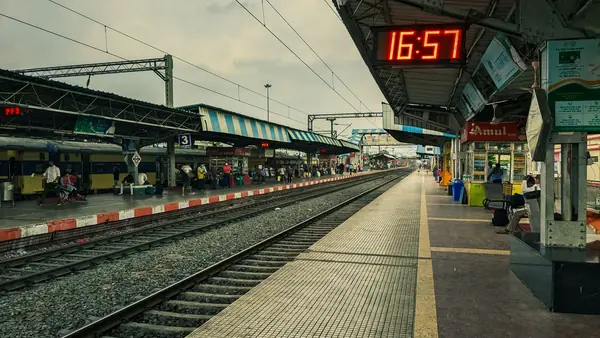
Photo: Partha Dutta / Pexels


Guwahati (GHY) is the main railhead for the entire Northeast, the point where broad-gauge trains from the rest of India hand off to onward road and rail connections into Assam, Meghalaya, Nagaland and the other northeastern states. Anyone travelling into the region by train passes through here at some point, which makes the station's practical details worth knowing before you arrive.
How do I get from Guwahati station to Kamakhya temple?
Kamakhya, one of the most important Shakti Peetha temples in India, sits on Nilachal Hill a short distance from the city. There's a dedicated Kamakhya station (KYQ) a few kilometres from Guwahati station, closer to the hill, and some trains stop there directly; if yours does, it can be a shorter final approach than starting from Guwahati station itself. From Guwahati station, a taxi or auto to the base of Nilachal Hill takes roughly 20-30 minutes depending on traffic, followed by a shared taxi or a walk up the final stretch to the temple.
Where is the prepaid taxi stand for onward trips?
A prepaid taxi counter operates outside the main station building, useful for fixing a fare in advance whether you're headed to Kamakhya, the city centre, or onward to Guwahati airport for a connecting flight. Ride-hailing apps also operate in Guwahati and are a reasonable alternative if you'd rather book from your phone.

Is there a cloak room for a same-day city stop?
Yes, Guwahati station has a cloak room (luggage office) where you can leave bags for a few hours or longer against a ticket, useful if you have a long layover before an onward connection and want to see Kamakhya or the city without carrying luggage. Standard rules apply: bags need to be lockable and you'll need a valid ticket to use the facility, so check current timings and any documentation needed at the counter itself.
Which platform typically handles trains from Delhi/Kolkata?
Guwahati is a large station with multiple platforms serving both originating and through trains, and the specific platform for any given train can change day to day depending on operational scheduling rather than being fixed permanently to one route. Rather than relying on a general rule, check the departure board on arrival or the live status of your specific train, which shows the current platform assignment as it's updated.
| Need | Where to go |
|---|---|
| Kamakhya temple | Kamakhya station if your train stops there, otherwise taxi from Guwahati station |
| Taxi or auto | Prepaid stand outside the main building |
| Luggage storage | Cloak room inside the station |
| Current platform for your train | Departure board or the train's live status page |
Using Guwahati as a gateway further into the Northeast
Beyond Kamakhya, Guwahati is where most onward journeys into the hills begin, whether by road toward Shillong and Meghalaya, or by connecting flights and further trains toward Nagaland, Manipur and Arunachal Pradesh. If you have a same-day layover, the city itself has enough to fill a few hours: the Umananda temple on a river island in the Brahmaputra, and a walk along the riverfront, both closer to the city centre than Kamakhya and easy to combine with a temple visit if time allows.

Station facilities beyond the basics
Guwahati station has waiting rooms, retiring rooms for passengers with a valid ticket who need a few hours' rest between long journeys, and food stalls covering both local Assamese snacks and the usual station fare. If you're arriving on an overnight train and have several hours before an onward connection, a retiring room is worth checking at the enquiry counter rather than waiting on the platform, especially with luggage.
A realistic same-day plan for a long layover
With four to six hours between trains, Kamakhya is the single best use of the time: temple visit, a look at the view over the Brahmaputra from Nilachal Hill, and back to the station with room to spare. With a shorter window, two to three hours, staying closer to the station and doing a short riverfront walk or simply resting in a retiring room is more realistic than attempting the temple and getting caught out by traffic on the return leg.
Checking your train before you arrive
Long-distance trains into Guwahati from Delhi, Kolkata and other major cities can run a couple of hours behind schedule on the final approach, since it's the end of a very long single journey. Check the live running status before finalising same-day plans at Kamakhya or elsewhere in the city, so you're not caught out planning around a scheduled arrival time that's already slipped. Our trip planner is also useful if you're booking an onward train from Guwahati and want to check availability before you arrive.
Use it on your trip
Frequently asked questions
How do I get from Guwahati station to Kamakhya temple?
Check if your train stops at the separate Kamakhya station, which is closer to the hill. Otherwise, a taxi or auto from Guwahati station takes about 20-30 minutes to the base of Nilachal Hill, followed by a shared taxi or walk up to the temple.
Where is the prepaid taxi stand for onward trips?
A prepaid taxi counter operates outside the main Guwahati station building, useful for both city trips and onward connections to the airport. Ride-hailing apps also operate in the city.
Is there a cloak room for a same-day city stop?
Yes, Guwahati station has a cloak room where you can store luggage for a few hours or more against a valid ticket, useful for exploring Kamakhya or the city during a long layover.
Which platform typically handles trains from Delhi/Kolkata?
There's no fixed platform for a given route since assignments can change day to day. Check the departure board or your train's live status on arrival for the current platform.
Sources
Rules and fares change. Check the official source before you travel. Last reviewed 29 September 2026.