Mumbai CSMT vs LTT vs Dadar: Which Station to Book
Central Railway trains in Mumbai use three main stations. Why some trains use LTT instead of CSMT, how far apart they are, and which to pick.
 TrainLiveStatus Desk · Updated · 4 min read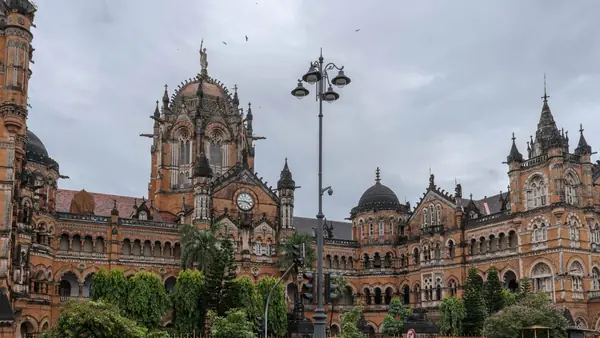
Photo: Roman Saienko / Pexels


Mumbai doesn't run long-distance trains from a single station. Western Railway trains use Mumbai Central and Bandra Terminus, and the three Central Railway stations that share the rest of the job sit far enough apart that turning up at the wrong one is a genuine problem, not just an inconvenience.
Why some Mumbai trains depart from LTT instead of CSMT
CSMT is a heritage building with a fixed, limited number of platforms in one of the most congested parts of south Mumbai, and it simply ran out of room to add more long-distance services. Lokmanya Tilak Terminus, in Kurla, was developed specifically to take pressure off CSMT, and a large share of trains heading toward Bihar, Uttar Pradesh, the south and the east now originate or terminate there instead, such as the LTT to Saharsa Amrit Bharat (11015).
How far apart the three stations are
| Route | Distance |
|---|---|
| CSMT to Dadar | About 9 km |
| CSMT to LTT | About 16-17 km |
| Dadar to LTT | About 8 km |
None of these are walkable distances, and Mumbai's road traffic makes the travel time unpredictable, especially at peak hours. The Mumbai suburban rail network, on both the Western and Central lines, is usually the more reliable way to move between them than a road taxi, particularly during the morning and evening rush.

Which station to pick for an early morning train
This comes down to where you're staying or arriving from, more than any general rule. If you're in south Mumbai, CSMT is the natural choice and the most iconic to arrive at. If you're coming from the eastern or central suburbs, or flying in and heading straight to a long-distance train, LTT can actually be the more convenient option despite its less central reputation, since it sits closer to the airport-side of the city than CSMT does. Dadar is worth considering if you want the flexibility of both suburban lines feeding into one station, especially if you're unsure which side of the city you'll be coming from on travel day.
Is Dadar a good backup if CSMT is too crowded
Yes, for many trains. A large number of long-distance services that start at CSMT also halt at Dadar a short while later, since it's such a major junction, and some travellers deliberately board or alight there instead of pushing through CSMT's crowds with luggage. Dadar also originates some of its own services, such as the DR-Satara Express (11027), so it isn't purely a pass-through stop.
The catch is that not every train that starts at CSMT necessarily halts at Dadar, and not every LTT-origin train passes through it either, so check your specific train's full route on its own page before assuming Dadar works as a substitute boarding point.
Checking which station your train actually uses
- Look at the station code on your ticket or PNR: CSMT, LTT or DR, not just "Mumbai".
- Check the train's full route on its own page if you're hoping to board partway rather than at the origin.
- Budget real transfer time if you're connecting between two of these stations on the same day, especially with luggage.
- Use the suburban rail network between them where possible; it's usually faster and more predictable than a road taxi at peak hours.

Check CSMT's live board, LTT's live board or Dadar's live board for real-time arrivals and platforms, and use the trip planner if you're comparing trains that might depart from any of the three.
A short history of why Mumbai has three
CSMT, a UNESCO World Heritage Site, was built in the Victorian era when Mumbai's long-distance rail traffic was a fraction of today's volume, and its Gothic architecture and fixed platform count were never designed to scale with the city's growth. As both the population and the number of long-distance services multiplied over the following century, the terminus increasingly became a bottleneck, particularly at peak travel seasons when queues could stretch well beyond the concourse.
LTT was developed through the 1990s and 2000s specifically to add capacity without rebuilding CSMT itself, and it has since grown into a major terminus in its own right rather than a minor overflow station. Dadar, meanwhile, was never built as a dedicated long-distance terminus at all; its importance comes from geography, sitting at the point where the Western and Central suburban lines meet, which made it a natural halt for long-distance trains regardless of which terminus they start or end at.
If you're arriving by flight and connecting onward
Travellers flying into Mumbai and connecting straight to a long-distance train should factor the terminus into their airport transfer planning, not just the train timing. LTT tends to sit closer to the domestic and international terminals than CSMT does, which can make it the more convenient connection depending on traffic, while CSMT usually means a longer road transfer through denser parts of the city.
Use it on your trip
Frequently asked questions
Why do some Mumbai trains depart from LTT instead of CSMT?
CSMT is a heritage terminus with limited platform capacity in a congested part of south Mumbai. LTT, in Kurla, was built to take pressure off it, and now handles a large share of long-distance trains, especially toward the south and east.
How far apart are these three stations?
CSMT to Dadar is about 9 km, CSMT to LTT is about 16-17 km, and Dadar to LTT is about 8 km. None are walkable, and Mumbai traffic makes road transfer times unpredictable.
Which station should I pick for an early morning train?
Whichever is genuinely closer to where you're staying or arriving from. CSMT suits south Mumbai, LTT suits the eastern suburbs, and Dadar is a flexible middle option on both suburban lines.
Is Dadar a good backup if CSMT is too crowded?
Often yes, since many CSMT-origin trains also halt at Dadar shortly after. Check your specific train's route first, since not every service stops there.
Sources
Rules and fares change. Check the official source before you travel. Last reviewed 28 September 2026.