Things to Do in Hampi After You Get Off the Train
A Hampi sightseeing plan built around Hosapete Junction, the nearest railhead, with real distances to the ruins, best season and how to get around the site.
 TrainLiveStatus Desk · Updated · 4 min read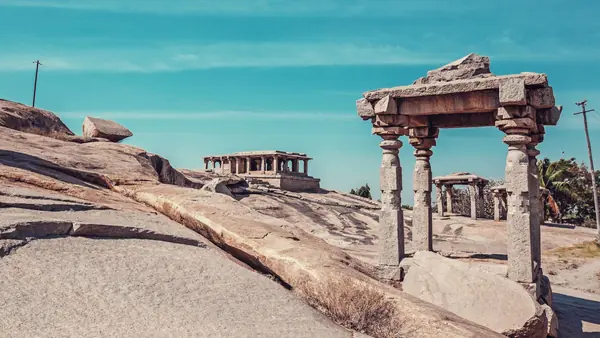
Photo: Anton Polyakov / Pexels


Hampi, the ruined capital of the Vijayanagara Empire, is one of India's most remarkable archaeological sites, a landscape of temples, boulders and stepped tanks spread across several kilometres. It has no railway station of its own, so almost every visitor arrives via Hosapete Junction (HPT), about 13 km away.
Getting from Hosapete to Hampi
Autos and shared jeeps run regularly from outside Hosapete station to Hampi Bazaar, taking about 25-30 minutes. Buses also cover the route and are the cheapest option if you're not in a hurry. Whichever you choose, it's worth arranging your onward transport as soon as you arrive rather than assuming it'll be easy at any hour, especially on a late-night arrival when fewer vehicles are waiting.
How far are the main sights from each other?
| Sight | Distance from Hampi Bazaar | Typical time |
|---|---|---|
| Virupaksha Temple | In Hampi Bazaar itself | Walking distance |
| Matanga Hill viewpoint | About 1 km, uphill | 20-30 min climb |
| Royal Enclosure and Lotus Mahal | About 3 km | 10-15 min by bicycle or auto |
| Vittala Temple (stone chariot) | About 2.5 km | 10-15 min, last stretch often on foot or by shared cart |
| Anegundi side (across the river) | Short boat crossing, when running | 10 min by coracle or boat, or longer by road |

Can it be covered in a single day?
Only the highlights, and it's a rushed day at that. Hampi's ruins are spread over a wide area split into two main clusters, the Sacred Centre around Hampi Bazaar and Virupaksha Temple, and the Royal Centre further south with the Lotus Mahal and elephant stables. Seeing both clusters properly, plus the Vittala Temple with its famous stone chariot, is realistically a two-day visit; cramming everything into one day usually means treating each stop as a quick photo stop rather than actually taking in the scale of the site.
A two-day plan
- Day 1: Virupaksha Temple and Hampi Bazaar in the morning, Matanga Hill for sunset, ideally timed to avoid the midday heat on the climb.
- Day 2: an early start for the Vittala Temple and its stone chariot, followed by the Royal Enclosure, Lotus Mahal and elephant stables in the Royal Centre, best covered by bicycle, moped or auto given the distances between them.
A note on entry tickets
Hampi's major monuments are managed by the Archaeological Survey of India, and a combined ticket covers several key sights including Vittala Temple and the Royal Enclosure area; check current pricing and whether it's sold online in advance or only at the site, since booking arrangements have changed periodically. Buying the combined ticket rather than paying separately at each monument saves time as well as money if you're visiting more than two or three of the covered sites.
Best time of year
October to February is by far the most comfortable season, cool enough for the walking and cycling the site demands. March to May gets genuinely hot, and the exposed, rocky terrain has little natural shade, making midday exploration uncomfortable. The June to September monsoon is milder here than in coastal Karnataka, though some low-lying paths near the river can be affected by higher water levels.

Food and where to stay
Hampi Bazaar has a cluster of simple cafes serving both local Karnataka food and a fairly international backpacker menu, a reflection of how long the area has drawn independent travellers. The villages across the river around Sanapur and Anegundi have a quieter, more laid-back set of guesthouses (the old Virupapur Gaddi guesthouses were demolished in 2020 after a Supreme Court order) and is a popular choice for a longer, slower stay away from the main bazaar's daytime crowds. Hosapete has more conventional hotel options if you'd rather have a wider choice of standard rooms and are comfortable with the daily commute.
Getting around the site itself
Bicycles are cheap to rent in Hampi Bazaar and are the classic way to get around, though the terrain is uneven in places and some stretches, especially toward the Royal Centre, are better covered by moped or auto if you're short on time or energy. Whatever you choose, carry more water than you think you'll need; shade is scarce across most of the site.
Which trains connect most easily to Hosapete?
Hosapete Junction connects to Bengaluru, Hubballi and other Karnataka cities, with a mix of overnight and daytime trains depending on the route. Check your train's live running status and typical delay pattern before an overnight arrival, since a delay changes how early you can realistically start exploring the ruins the next morning, especially if you're planning to beat the heat with an early Vittala Temple visit. Our trip planner shows live seat availability if you're still choosing between a daytime and an overnight option.
Use it on your trip
Frequently asked questions
How far are the main attractions from Hampi railway station?
Hampi has no station of its own. The nearest railhead is Hosapete Junction, about 13 km from Hampi Bazaar, reached by auto, shared jeep or bus in about 25-30 minutes.
What is the best time of year to visit Hampi?
October to February is coolest and most comfortable for the walking and cycling the ruins require. March to May is hot with little natural shade across the site.
Can Hampi's highlights be covered in a single day?
Only the main highlights, and it's rushed. The ruins span two separate clusters, the Sacred Centre and the Royal Centre, plus the Vittala Temple, which together are more realistically covered over two days.
Is prepaid auto or taxi available right outside Hampi station?
Hampi itself has no station; autos, shared jeeps and buses are available outside Hosapete Junction for the roughly 13 km trip into Hampi.
Which trains connect most easily to Hampi?
Hosapete Junction, the nearest railhead, has connections to Bengaluru, Hubballi and other Karnataka cities on a mix of overnight and daytime trains.
Sources
Rules and fares change. Check the official source before you travel. Last reviewed 28 September 2026.