Rajdhani vs Shatabdi vs Vande Bharat: Which to Pick
The real differences between Rajdhani, Shatabdi and Vande Bharat trains: journey length, sleeping vs chair car, food, and how to check each one's actual punctuality.
 TrainLiveStatus Desk · Updated · 5 min read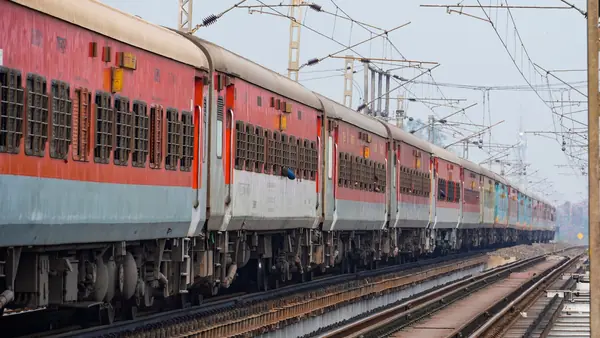
Photo: Rounak Kayal / Pexels


All three are premium, fully air-conditioned Indian Railways services, but they are built for different journeys, not ranked better-to-worse. The fastest way to pick is to ask what kind of trip you're making: overnight and want a berth, a same-day there-and-back, or the shortest possible daytime run on a route the Vande Bharat covers.
What each one is actually for
| Rajdhani | Shatabdi | Vande Bharat | |
|---|---|---|---|
| Typical distance | Long, overnight (Delhi to state capitals) | Medium, same day, usually up to about 8-9 hours | Short to medium, same day; some new routes overnight |
| Seating | AC sleeper berths (1A/2A/3A) | AC chair car and executive chair car | AC chair car and executive chair car; sleeper rolling out on select routes |
| Food | Optional, charged with the fare | Optional, charged with the fare | Optional, charged with the fare |
| First introduced | 1969 | 1988 | 2019 |
Which is faster on the same route
Where a Vande Bharat and a Shatabdi both run on the same corridor, the Vande Bharat is usually the faster of the two, thanks to quicker acceleration and shorter halts, though the actual time saved varies route by route and can be a modest 20-40 minutes rather than a dramatic difference. Rajdhani isn't really comparable on speed in the same way, since it's built to cover overnight distances that a same-day chair car train doesn't attempt at all.
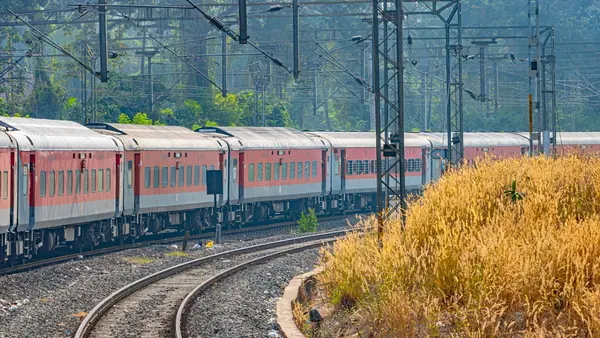
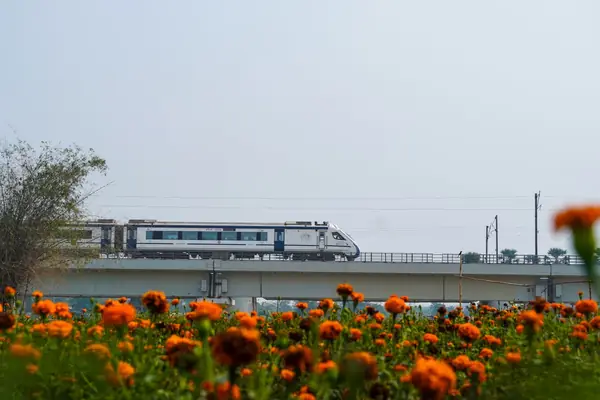
For example, the Howrah Rajdhani (12301) covers Howrah to New Delhi overnight, a distance no Shatabdi or Vande Bharat on that corridor runs in a single sitting. The Bhopal Shatabdi (12001) is a classic same-day chair car run between Bhopal (Rani Kamlapati) and New Delhi. The Jodhpur-Sabarmati Vande Bharat (12461) shows the newer chair-car format on a shorter corridor.

Does Shatabdi run overnight or only daytime?
Shatabdi trains are designed as same-day return services: leave in the morning, arrive by afternoon or evening, and the return working typically leaves the destination the same day or the next morning so the rake is back in position. They do not have sleeper berths, so a Shatabdi is not the right choice if your journey runs past midnight.
Food included in the fare
On all three, catering is offered at booking and its charge is added to your ticket fare if you take it, served at your seat or berth rather than needing a separate order, though the exact menu and number of meal services depends on the specific train's schedule (a short day run gets one meal or a snack, an overnight Rajdhani gets dinner and breakfast). Passengers who don't want the meals can opt out at booking and the catering charge is then not collected; check the option at the time of booking on IRCTC.
Checking on-time performance for your actual train
Manufacturer specifications don't tell you how a train actually runs on its route day to day. That depends on track congestion, weather and how many other trains share the section. Rather than relying on a generic "Vande Bharat is always on time" claim, look up the specific train number you're considering and check its live running status and delay history on its own page before you book. A train's typical delay on a given route is usually a better predictor than its category badge.

A simple decision rule
- Journey longer than about 8-10 hours, or you'd rather sleep through the night: look for a Rajdhani or another overnight AC train on your route.
- Same-day there-and-back, roughly 4-7 hours each way, chair car is fine: a Shatabdi.
- Shortest possible daytime run and a Vande Bharat exists on your corridor: take it, it's usually the quickest option, though check the actual time saving against a Shatabdi on the same route rather than assuming.
- Overnight but you want the newer Vande Bharat experience: only available on the small but growing number of Vande Bharat Sleeper corridors; check current routes before assuming one runs on your route.
Class options within each train
Rajdhani trains carry three AC classes: first AC (1A), second AC (2A) and third AC (3A), so there's a real price range within a single train depending on how much privacy and space you want overnight. Shatabdi and most Vande Bharat chair-car rakes offer two tiers, AC chair car and the pricier executive chair car, which has wider seats and extra legroom. The Vande Bharat Sleeper, where it runs, has the same 1A/2A/3A structure as a Rajdhani rather than chair car seating, at a somewhat higher fare.
A note on Vande Bharat Sleeper
Indian Railways has been extending Vande Bharat service to overnight sleeper routes, moving it from a purely daytime chair-car product toward something that competes directly with Rajdhani on longer corridors. Coverage is still limited to a small number of routes and is expanding, so check the current list of running Vande Bharat Sleeper services before assuming one covers your journey; our guide on Vande Bharat Sleeper routes and fares tracks this as new corridors are added.
Punctuality is a route problem, not a train-class problem
A premium train shares track with everything else on its route, so its delay pattern is shaped by the section it runs through as much as by its own design. A Vande Bharat squeezed behind slower freight and passenger traffic on a congested stretch can run late just as an older Mail/Express does, and a well-timed Shatabdi on a lightly used corridor can be reliably on time. This is exactly why we show delay history per train rather than per category: it's the honest way to compare two specific options on your actual journey.
Booking window and cancellation
Because these are fully reserved trains with no unreserved coaches, booking opens the same 60 days ahead of departure as any other reserved train, and the same Tatkal window applies closer to the date if regular quota fills up. Cancellation charges are generally higher in the premium AC classes than in Sleeper class on an ordinary train, so check the refund slab for your class before booking if your plans are still uncertain.
Booking and classes
All three are booked like any other reserved train through IRCTC, and none of them carry a Tatkal-only or unreserved option; you need a confirmed seat or berth booked in advance, with the usual Tatkal window available closer to the date if regular booking is full. Fares are higher than an ordinary Mail/Express train of the same class because of their premium fare structure and, if you take it, the catering charge, so compare the total against a Mail/Express plus a separately-bought meal if budget is tight.
Use it on your trip
Frequently asked questions
Which is faster on the same route, Rajdhani or Vande Bharat?
They rarely run the identical corridor since Rajdhani is built for overnight distances and Vande Bharat for same-day runs. Where a Shatabdi and Vande Bharat share a route, the Vande Bharat is usually somewhat faster.
Does Shatabdi run overnight or only daytime?
Shatabdi is a same-day return service with chair car seating only, no sleeper berths, so it's built for daytime travel that finishes before or around evening.
Which one has better food included in the fare?
On all three, meals are chosen at booking and the catering charge is added to the fare; you can opt out. The menu depends more on the specific train and journey length than on which category it belongs to; an overnight Rajdhani serves more meals than a short day Shatabdi.
Which has a better on-time record on my route?
That depends on the specific train and route, not the category. Check the live status and delay history on that exact train's page rather than assuming one class is always punctual.
Sources
Rules and fares change. Check the official source before you travel. Last reviewed 29 September 2026.