Group Booking Rules for More Than 6 Passengers
How group booking works once you're past IRCTC's 6-passenger limit: the formal process, realistic lead times, and what discounts actually apply.
 TrainLiveStatus Desk · Updated · 5 min read
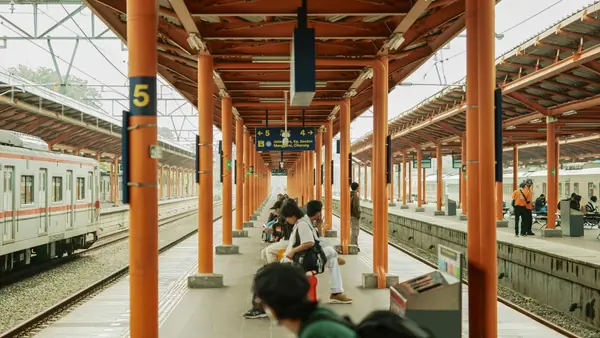
Photo: Irsyad Rifqi / Pexels
Booking for a family reunion, a company offsite or a large pilgrimage group is genuinely different from a normal IRCTC booking, both in the form you use and the lead time you need. Indian Railways treats a large group booking as its own category, separate from the usual individual reservation, with its own process and its own timeline.
What counts as a group booking
A group booking generally applies once you're travelling with more than the number of passengers a single PNR can hold through the normal online booking flow, six passengers per transaction on IRCTC for most classes (four per PNR for Tatkal). Beyond that, groups are handled either as multiple linked bookings made together, or through a dedicated group booking request to the railway for larger parties, which is the more reliable route for genuinely large groups such as a school trip, a wedding party or an official delegation.
How the formal group booking process works
For larger parties, the standard route is a written request to the railway's commercial or reservation office well in advance, specifying the train, date, class, number of passengers and purpose of travel. This is handled outside the normal 60-day advance reservation window in some cases, since large-block bookings for genuine group travel can be coordinated directly with the zonal railway rather than competing passenger-by-passenger in the general quota. Requirements and exact procedures vary somewhat by zone, so check with your nearest reservation office or the zonal railway's official site for the current form and process.
How far in advance to apply
| Group size | Suggested approach | Lead time |
|---|---|---|
| Under 6 | Standard single IRCTC booking | Book as soon as the 60-day window opens for your date |
| 6-20 | Multiple linked bookings, or a group request for popular routes/dates | Book at 60 days out; consider a formal request 2-3 months ahead for festival or peak dates |
| 20+ | Formal group booking request to the railway | Apply several months ahead; large requests need real lead time for allocation |
Do group bookings get a discount
Concessions for group travel exist in specific, defined categories rather than as a blanket discount for any large group, for example certain categories tied to educational tours, sports teams or other officially recognised group travel purposes. A general family or friends group booking a large number of tickets does not automatically qualify for a fare discount simply by virtue of size. Check current concession categories and eligibility with the railway directly, since these rules and rates are subject to change and are best confirmed at the time of booking rather than assumed.
Can a group booking be split across classes
Yes, in principle a large group can be split across classes, for example some members in 3AC and others in sleeper, either by making separate transactions for each class or, for a formal group request, by specifying the mixed requirement in the application. In practice this is more coordination-heavy, since you'll be tracking multiple PNRs with potentially different confirmation outcomes, so it helps to designate one person in the group to manage all the bookings and monitor status together.

Practical tips for organising a large group trip
- Designate one coordinator to hold all PNR numbers and monitor confirmation status, rather than leaving each traveller to track their own.
- Book under the same login sequence where using multiple standard transactions, so seats are more likely to be allocated near each other.
- Have a backup plan for partial confirmation. Large groups are statistically more likely to see at least some members waitlisted; decide in advance how you'll handle a split outcome.
- Check total group size against a single coach's capacity if travelling together matters a lot, since even a full block booking may span more than one coach depending on class and train configuration.
What the trip planner can and can't help with
Our trip planner shows seat availability and confirmation chances for a given train, date and class, which is useful for checking whether a large group's preferred train realistically has enough open berths before you commit to booking. It does not process formal group booking requests directly, since that goes through the railway's own commercial channels; use it to scout availability, then follow up with IRCTC or the reservation office for the actual booking.
A common mistake worth avoiding
Groups often wait until numbers are fully finalised before booking anything, which can cost weeks of lead time on a popular route or date. A more reliable approach is to book for a confirmed core group early, within the standard window, and handle a few additional or uncertain members through separate bookings closer to the date, rather than delaying the whole group's travel plans until every last member has confirmed attendance.
Documentation to keep ready
For a formal group booking request, expect to provide details such as the group's purpose of travel, an official letter if it's an institutional trip (school, college, company or a recognised organisation), and a passenger list with names and ages. Having this ready before you approach the reservation office speeds up processing, since incomplete requests typically get sent back for the missing information, costing valuable lead time on an already lengthy process.
For the standard booking window that applies to any individual leg within your group's travel, see our advance reservation period guide, and if any part of your group's tickets end up waitlisted, our waiting list guide explains how to read the odds.
Check seats and confirmation chances
Shows availability by class, the chance a waitlisted ticket confirms, nearby boarding stations and two-train connections.
Use it on your trip
Frequently asked questions
What is the minimum group size for group booking?
There's no strict minimum, but the formal group booking process becomes the practical route once your party exceeds IRCTC's standard 6-passenger-per-transaction limit and you want to travel together on the same train.
Do group bookings get a discount?
Not automatically. Concessions apply to specific recognised categories, such as certain educational or sports group travel, rather than to any large booking simply because of its size. Check current eligibility with the railway directly.
How far in advance should I apply for group booking?
Small linked bookings under 20 passengers can often work within the normal 60-day advance window. Larger formal group requests need significantly more lead time, often several months, for the railway to allocate berths or coaches.
Can a group booking be split across different classes?
Yes, either through separate transactions for each class or by specifying a mixed requirement in a formal group request. This adds coordination overhead, so it helps to have one person track all the PNRs together.
Sources
Rules and fares change. Check the official source before you travel. Last reviewed 5 October 2026.