Who to Call When AC Stops Working Mid-Journey
The right onboard steps when your AC coach's cooling fails mid-journey: who to tell first, when to call 139, and how that's different from a refund claim.
 TrainLiveStatus Desk · Updated · 4 min read
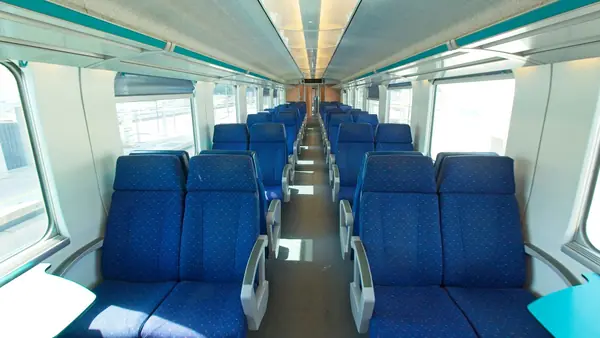
Photo: Emmanuel Codden / Pexels
An AC coach with the cooling out on a summer afternoon is one of the more common onboard complaints, and also one of the more fixable ones if you report it the right way and to the right person first.
Who onboard should I approach first about an AC fault?
Start with the coach attendant if your train has one, which most AC coaches on Rajdhani, Duronto, Shatabdi and regular AC classes do, or the TTE doing rounds if you can't find the attendant. They can radio ahead to the next station where a mechanical or electrical staff member is posted, or in some cases adjust or reset the unit themselves if it's a minor fault rather than a full breakdown. Reporting it early, rather than waiting to see if it fixes itself, gives the train the best chance of getting a technician to meet it at the next available stop.
Is there a helpline I can call while the train is moving?
Yes. If the coach attendant or TTE hasn't resolved it within a reasonable time, or you can't locate either, call 139 and press 4 for a general complaint, which covers exactly this kind of coach-condition issue. The complaint reaches the control room in real time and can be flagged to the next technical halt even if the coach attendant hasn't already done so. Our full 139 helpline guide covers the rest of that menu and how to follow up on a complaint number.
Pick your situation
Rail helpline 139, IRCTC 14646, emergency 112. Rail Madad: railmadad.indianrailways.gov.in.
Does reporting this help with a later refund claim?
Yes, and it's worth doing even if the fault gets fixed quickly. A complaint logged through 139 or Rail Madad, or a note from the TTE, becomes part of the record that supports a refund claim if you decide to file one afterward. Refunds for AC failure are handled as a separate process from the onboard complaint itself, filed as a TDR after your journey within a short window after the train's arrival, and a certificate or note from the TTE about the failure helps. Our dedicated guide to AC failure refund rules covers exactly how that claim works, what counts as a qualifying failure, and the current process for AC classes including Rajdhani and Shatabdi.

| Step | What to do |
|---|---|
| 1. Report onboard | Tell the coach attendant or TTE as soon as you notice the fault |
| 2. Escalate if needed | Call 139, press 4, if nothing happens within a reasonable time |
| 3. Keep a record | Note the time, station, and any complaint reference given |
| 4. Claim later if eligible | File a TDR refund claim promptly after the journey, separately |
How long does an onboard AC fix usually take?
It varies a lot depending on what's actually wrong. Some faults are a reset or a filter issue that a mechanical staff member can sort out within minutes at the next stop. Others, particularly a compressor or major electrical fault, may mean the coach runs without full cooling for a longer stretch until the train reaches a station with the right maintenance facility, sometimes hours away. There's no fixed promised timeline, which is exactly why reporting it early and, if needed, escalating through 139 gives you the best chance of a faster response rather than waiting it out silently.
What to do while you wait
- Keep hydrated and avoid direct sun through the window if the coach has warmed up noticeably.
- Check your train's live running status for the next major stop, since that's usually where a technician can actually board or where a coach change is more feasible.
- Ask fellow passengers if they've also reported it, since a fault affecting the whole coach, rather than one vent, is worth confirming isn't just your seat.
- Save any complaint reference number you're given, for the refund claim afterward.
Reporting an AC fault promptly, to a person first and then 139 if needed, is the fastest route to an actual fix during the journey. The money side of it, if the fault was serious enough to affect your comfort meaningfully, is a separate step you take once you're home.
Different AC classes, same first step
Whether you're in a Rajdhani or Duronto's AC 1 or 2 Tier, a regular Shatabdi chair car, or AC 3 Economy on a mail or express train, the escalation path is the same: attendant or TTE first, then 139 if there's no response. Premium trains like the Rajdhani and Duronto do tend to have a dedicated coach attendant on duty for their full length, which usually means a faster first response than a general AC 3 Tier coach on a regular express, where you may need to find the TTE doing rounds instead.

It's also worth checking whether the fault is affecting your whole coach or just your section. A complaint about one vent near your seat is handled differently from a full compressor failure affecting everyone in the coach, and telling the attendant which it is helps them judge how urgently to escalate it up the chain.
For everything else about what 139 can and can't help with in the moment, including how to use it by SMS if your signal is weak, our 139 helpline guide has the complete picture. A cold coach isn't the only AC-class complaint worth knowing how to raise; missing or dirty bedding is another common one, covered in our bedroll and linen complaint guide.
Use it on your trip
Frequently asked questions
Who onboard should I approach first about an AC fault?
The coach attendant if your train has one, or the TTE doing rounds. They can radio the fault ahead to the next station for a technician or attempt a fix themselves.
Is there a helpline I can call while the train is moving?
Yes, call 139 and press 4 for a general complaint if the attendant or TTE hasn't resolved it, which flags it to the control room in real time.
Does reporting this help with a later refund claim?
Yes. A complaint logged through 139, Rail Madad or the TTE supports a refund claim filed afterward, which is a separate process from the onboard report.
How long does an onboard AC fix usually take?
It varies from a quick reset within minutes to a longer wait if the fault needs a technician or parts at a specific station. There's no fixed promised timeline.
Sources
Rules and fares change. Check the official source before you travel. Last reviewed 7 October 2026.