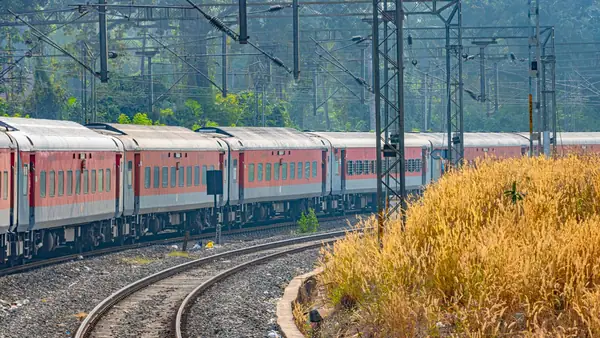
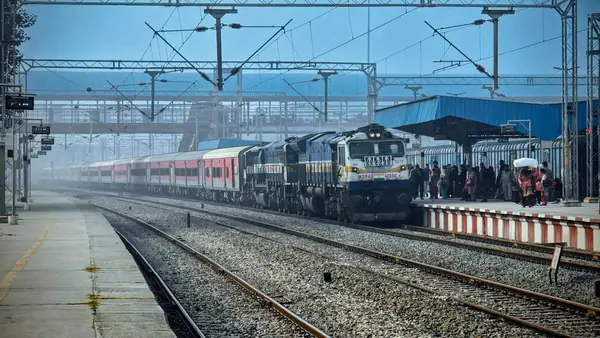
Winter Fog and Trains: Buffers, Checks and Backup Trains
How dense fog affects north Indian trains in winter, which hours to plan around, how much buffer to add to a connection, and what to check on the day.
 TrainLiveStatus Desk · Updated · 5 min read
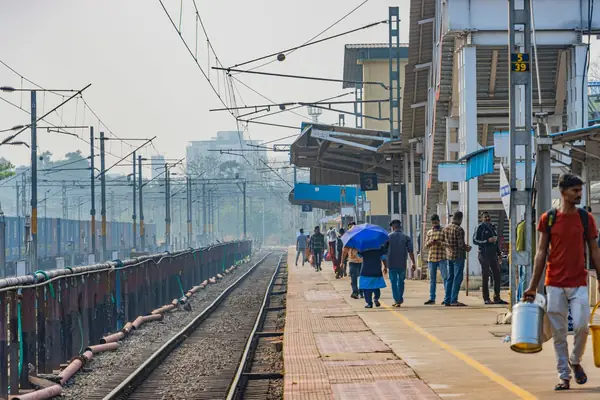
Fog does not stop every train, but in the coldest weeks of the year it can badly slow the north Indian network. Visibility drops, loco pilots run at reduced speed through foggy stretches, and signals are harder to read. The result is a long chain of small delays that builds up through the day, and some trains are cancelled or start from a different station. This post covers what to expect, how much buffer to add, and what to check before you leave.
When fog usually hits trains
In most winters the worst fog falls in December and January, across the Indo-Gangetic plain from Punjab and Haryana through Uttar Pradesh, Bihar and into West Bengal. Trains to and from Delhi and Lucknow run through this belt. The heaviest disruption tends to come in the late night and early morning, and it often lingers until mid-morning on the worst days. The exact dates change every year, so treat the pattern as a planning guide and check the forecast from the India Meteorological Department before you commit to a tight schedule.
Fog is not the only winter problem. Trains running through the same corridor can also be held up by track work, and long-distance trains often arrive late at Delhi simply because they started late from somewhere else. Our fog delay route guide looks at which corridors are hit hardest, and the buffer guide for the 2026-27 season covers the same ground in more depth.
What fog does to a journey
Most travellers meet fog in one of three ways. The first is a plain delay: the train reaches its destination two, four or sometimes six hours late. The second is a short-termination, where the train stops at a junction before its final station and the rest of the journey is cancelled. The third is a cancellation, which may be announced weeks ahead for the fog season or much closer to the day of travel.
The delay is the most common. A train that is six hours late may still reach its destination, but it misses the connection, the hotel check-in and the morning meeting you planned around it. That is why the buffer you add matters more than the train you choose.
How much buffer to add
Use the table below as a starting point. It assumes an overnight or early-morning train that is linked to a second journey on the same day.
| Your connection | Minimum buffer in fog season | What to do instead |
|---|---|---|
| Train arriving at a city, then a flight | At least 4 hours | Book the flight for the next day if the train is due after 10:00 |
| Train arriving, then a second train the same day | At least 3 hours | Choose a later second train or stay overnight |
| Train arriving, then a local pick-up or cab | At least 2 hours | Book a pick-up only if the driver can wait |
| Train arriving, then a wedding or ceremony | Arrive a day early | Do not plan the ceremony for the morning after an overnight train |
These figures are our own planning guide, not an official rule. A fog delay can last longer than any buffer on a bad morning. The real protection is to have a second option, not just more time on the first.
Check the train, not the forecast
A weather forecast tells you that fog is likely. Only the train's own running status tells you what is happening to your train today. Check it at two points. The first is the evening before, to see whether the train is already running late from its origin. The second is at dawn, because a train that was on time overnight can start losing time in the early morning.
Our live status page for the Howrah Rajdhani (12302) shows where the train is and how far behind it is running; it leaves New Delhi at 16:50 and does not start on Fridays. For Lucknow-bound travel, the Lucknow Mail (12230) and the New Delhi to Lucknow AC Express (12430) are good trains to check side by side, since both run daily, leave New Delhi at night (22:00 and 23:25) and are timed to reach Lucknow in the morning (06:40 and 07:35). If one is running badly, the other may still be on time.

Build a backup into the day
The best protection against fog is a second train you could take the same day. Pick a train that leaves an hour or two later, check it has seats, and keep the option in your head. Our trip planner shows alternative trains and boarding stations, and it is quicker to check the backup while you still have a choice.
- Book the train that gets you there with the most margin, not the fastest one.
- Keep one backup train on the same day, even if it costs a little more.
- If the connection is critical, travel the day before and stay the night.
- Save the station name and the train number on your phone so you can tell the staff quickly if you need to rebook.
If your train is cancelled or cut short
Do not wait for a refund message before you act. Speak to the station staff or call 139 to confirm the new arrangement, and ask for the revised train details in writing where possible. A train cancelled by Indian Railways is treated differently from a cancellation you choose to make, so check the current official refund rules on the IRCTC website rather than relying on an old figure from a friend or a forum.
If you are on a long journey with children, elderly passengers or someone with a medical need, tell the train staff early. For a wider set of practical tips, see our winter travel tips for north India.
Practical checklist for fog season
- Check the train status the evening before and again at dawn.
- Add at least three hours to any same-day connection that depends on an overnight or early-morning train.
- Pack warm layers and a charged power bank, since trains can stop for long stretches.
- Keep one backup train and its number in your phone.
- Do not plan a ceremony or an important meeting for the morning after an overnight train in peak fog months.
Where is your train right now?
Live position, expected arrival at every stop and the delay history of the last few weeks.
Use it on your trip
Frequently asked questions
Which months are the worst for fog delays on north Indian trains?
December and January are usually the worst in most winters, especially across the Indo-Gangetic plain. The exact dates change from year to year, so check the forecast closer to your travel date.
How much buffer should I add to a connection in fog season?
For a same-day second train that depends on an overnight or early-morning train, we suggest at least three hours. For a flight after a train, at least four hours, or the next day if the train is due after 10:00.
Where do I check if my train is running late because of fog?
Check the live running status on the train's own page on our site the evening before and again at dawn. Also check the official Indian Railways information channels, since they are the authority on cancellations.
Is fog a reason for a full refund on a train I booked?
A train that Indian Railways cancels is treated differently from one you cancel yourself. Check the current official refund rules on the IRCTC website for the exact terms, since they change.
Sources
Rules and fares change. Check the official source before you travel. Last reviewed 27 November 2026.