Fog Season Train Delays: Which Routes and Months Are Worst
December and January bring the worst fog delays to trains into Delhi and the Indo-Gangetic plain. Which routes are hit hardest and how to check your train today.
 TrainLiveStatus Desk · Updated · 4 min read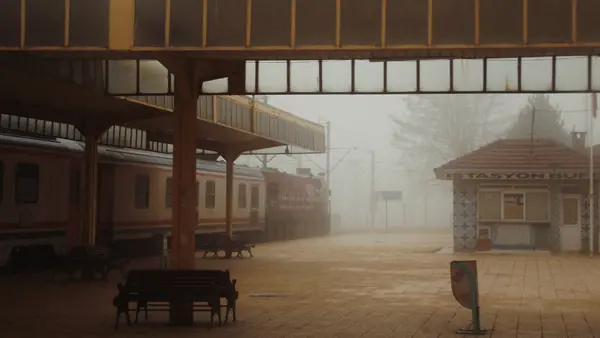
Photo: nurullah bulut / Pexels


If you're booking a north India train for December or January, fog is worth planning around, not just hoping to avoid. It's the single biggest seasonal cause of delay on the network, concentrated in a specific stretch of the country and a specific couple of months, and it catches travellers out every year who didn't expect a 4 or 5 hour delay on what's normally a punctual route.
Why fog causes such big delays
Dense fog cuts visibility for loco pilots reading signals and track conditions, so trains are required to slow down significantly for safety, sometimes to a crawl, in the worst-affected stretches. Unlike a mechanical fault or a single blocked section, fog can blanket hundreds of kilometres of track at once, which is why delays during a bad fog spell tend to be large and can compound across a train's whole route rather than being a one-off local hold.
Which months are worst
December and January are consistently the peak fog months across north India, with visibility dropping sharply on many mornings, especially in the days around and after Christmas through late January. Late November and early February can also see fog, generally less severe and less frequent than the core winter weeks. Outside this window, fog-related delay is rare on most routes.

Which routes are hit hardest
Fog is heaviest across the Indo-Gangetic plain, so routes running through Delhi, Punjab, Haryana, western and central Uttar Pradesh and parts of Bihar see the most disruption. Trains originating in or passing through Delhi, whether heading toward Punjab, UP, Bihar or further, are especially exposed since Delhi itself and its approaches are frequently fog-affected in peak winter.
| Region | Typical impact |
|---|---|
| Delhi and NCR approaches | Very high; frequent multi-hour delays on winter mornings |
| Punjab and Haryana | High; similar fog patterns to Delhi |
| Western and central Uttar Pradesh | High; long stretches often affected together |
| Bihar and eastern UP | Moderate to high, somewhat later in the season |
| Peninsular India (south of roughly central India) | Low; fog delay is rare here |
Do trains get cancelled outright, or just slowed down?
Both happen, depending on severity. On most foggy days, trains keep running but arrive significantly late due to the mandated slower speeds. On the worst visibility days, Indian Railways does cancel or short-terminate some services, particularly ones that would otherwise arrive very late or where a knock-on effect on other scheduled trains makes it impractical to keep running. Cancellations are announced with as much notice as conditions allow, but severe fog can develop with limited warning, so it's not always a decision made far in advance.
Checking if fog is affecting your train today
The most reliable way to know is to check live running status on the actual day of travel, ideally the morning of, rather than relying on a general seasonal expectation. Fog conditions vary day to day and even hour to hour, so a route that ran smoothly yesterday can be hit hard today, and vice versa. Our live running status pages reflect the delay as it's actually being reported, which is a better signal than trying to guess from a weather forecast alone.

Planning around fog season
- Build in slack for connections. If you're connecting to a flight or another train after a winter journey through the fog belt, leave a much bigger buffer than you would the rest of the year.
- Check status the morning of travel, not just when you book. A delay can develop or clear overnight.
- Have a backup plan for tight schedules. If a delay would badly disrupt your trip, consider whether an earlier train, extra buffer day, or alternate travel mode makes sense for peak fog weeks.
- Don't assume a normally punctual train is safe. Fog affects almost every train passing through the belt, regardless of its usual on-time record the rest of the year.
For the general mechanics of how delay and recovery time work outside of fog season, our why trains run late guide is useful background, though fog delay behaves somewhat differently since it affects entire regions at once rather than a single train's individual schedule.
If your train is delayed by fog
If you decide not to travel because of a severe fog-related delay, the same TDR process that applies to other significant delays applies here too, with its own deadlines and reason codes. For a pickup or connection timed around a fog-delayed train, our pickup planning guide covers how to set a safer leave-by time when delay figures are moving.
What changes on the train itself during fog
Aside from the slower speed, well-prepared trains on fog-prone routes are increasingly fitted with fog safety devices that help loco pilots know upcoming signal and landmark positions even when visibility drops to a few metres. This has improved safety significantly over older methods, but it doesn't eliminate the need to run slower in zero-visibility conditions, so the delay itself is largely unavoidable even with better onboard technology. Expect coach temperatures to run cooler than usual too, since winter fog mornings are typically the coldest part of the season on these routes.
Use it on your trip
Frequently asked questions
Which months have the worst fog-related delays?
December and January see the heaviest and most frequent fog-related delays across north India, with late November and early February also occasionally affected.
Which routes into Delhi are hit hardest?
Routes across the Indo-Gangetic plain: Delhi and NCR approaches, Punjab, Haryana, and western and central Uttar Pradesh see the most disruption, since fog blankets this whole belt together on bad mornings.
Do trains get cancelled outright for fog or just slowed down?
Both. Most foggy days just mean significantly slower running and late arrivals for safety. On the worst visibility days, some services are cancelled or short-terminated as conditions require.
Is there a way to check if fog is affecting my specific route today?
Check live running status on the actual day of travel, ideally that morning, since fog severity varies day to day. This is more reliable than assuming based on the season alone.
Sources
Rules and fares change. Check the official source before you travel. Last reviewed 3 October 2026.