Fine for Travelling in a Higher Class Than Booked
What you pay if a TTE finds you in a higher class than your ticket: the fare difference plus an excess charge, and how this differs from a TTE upgrade.
 TrainLiveStatus Desk · Updated · 4 min read
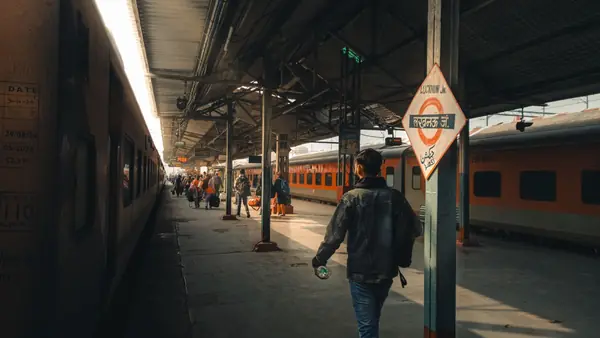
Photo: Mohammad Rafy / Pexels
Sitting in a higher class than your ticket allows, even for one station or because your own coach was overcrowded, is treated as a fare violation, not a grey area. Here is what the law says happens if you are caught, and how the numbers work.
How the amount is calculated
Section 138(2) of the Railways Act, 1989 says a passenger who travels or attempts to travel in a carriage or train of a higher class than the one they obtained a pass or purchased a ticket for is liable to pay, on the demand of an authorised railway servant, two things: the difference between the fare paid and the fare payable for the journey made, and the excess charge. Under Section 138(3), the excess charge is a sum equal to the fare difference, or two hundred and fifty rupees, whichever is more. That Rs 250 minimum is the figure in the Act as enacted. News reports say the minimum was raised to Rs 500 in June 2026 under the Jan Vishwas (Amendment of Provisions) Act, 2026. We could not confirm the revised text on an official page, so check the current amount on the railway receipt or with the TTE.
| Component | How it is worked out |
|---|---|
| Fare difference | Fare payable for the class and journey made, minus the fare you paid |
| Excess charge | An amount equal to the fare difference, or the fixed minimum, whichever is more |
| Total payable | Fare difference plus excess charge |
For a short hop where the fare difference is small, the fixed minimum is what drives the bill. Worked example, using the Rs 250 figure in the Act: if the fare difference for the stretch you travelled is Rs 100, the excess charge is Rs 250 because that is more than Rs 100, and you pay Rs 350 in all. Ask for a receipt for whatever you pay.
Is this the same as asking a TTE for a berth in a higher class?
No, and the difference is written into the law. Section 55 of the Railways Act says a person needs a proper pass or ticket, or the permission of an authorised railway servant, to travel, and that a person given permission should ordinarily get a certificate from that railway servant, on condition that they later pay the fare for the distance travelled. Section 138(3) then says that if the passenger has such a certificate, no excess charge is payable. So the safe route is to ask before you move, get permission and a certificate from the TTE, and pay the fare as the TTE directs. Moving into a higher class on your own, with no permission, leaves you open to the full excess charge.
Can I request to sit in a higher class and pay the difference?
You can ask, but it depends on a railway servant allowing it, and on whether a berth is actually vacant. The reliable way to travel in a higher class is to book that class from the start. Walking into a higher class coach uninvited and hoping to sort it out afterwards risks the full excess charge.
What if my own coach is overcrowded or missing?
If you cannot use the class you booked, tell the TTE as soon as you can rather than settling into a higher class seat and waiting to be found. The refund rules do deal with the opposite case, where a higher class passenger is made to travel in a lower class for want of accommodation (rule 18, with a certificate from the ticket checking staff). They do not say what happens when you move up by yourself, so do not assume leniency.
What if I refuse to pay?
Section 138(4) says that if a passenger liable to pay the fare difference and excess charge refuses to pay on demand, an authorised railway servant may apply to a Metropolitan Magistrate or a Judicial Magistrate of the first or second class to recover the sum as if it were a fine. As enacted, the Act also provided for imprisonment in default of payment. In practice, most cases are settled on the spot with payment and a receipt, but the legal route is there.
How this differs from the automatic upgrade scheme
IRCTC also runs a separate automated upgrade decided at chart preparation, well before you board. That is nothing to do with a TTE finding you mid-journey. Our guide to auto upgradation covers how that process works.
Staying on the right side of this rule
- Stay in your booked class unless a railway servant has given you permission to travel elsewhere.
- Ask before you sit, and get the certificate that Section 55 describes.
- Keep any receipt if you do end up paying.
- Book the class you actually want at the time of booking, using the trip planner to see seat availability across classes.
For the legitimate route, where the TTE allots you a berth, see our guide on how the TTE upgrade works at boarding. The railway helpline is 139.
Use it on your trip
Frequently asked questions
Is this the same as getting a TTE upgrade?
No. Section 55 allows travel with the permission of an authorised railway servant, who should ordinarily give a certificate, and Section 138(3) says no excess charge is payable if you hold such a certificate. Moving into a higher class without permission leaves you liable for the fare difference plus the excess charge.
How is the amount calculated?
You pay the fare difference for the journey made, plus an excess charge equal to that amount or a fixed minimum, whichever is more. The Act set the minimum at Rs 250, and news reports say it was raised to Rs 500 in 2026. Check the current figure on your receipt.
Can I request to sit in a higher class and pay the difference?
You can ask the TTE, but it depends on the railway servant allowing it and on a berth being free. Booking the class you want from the start is more reliable.
What happens if I refuse to pay?
Under Section 138(4), a railway servant can apply to a Magistrate to recover the amount as if it were a fine.
Sources
- The Railways Act, 1989, Section 138 (India Code / Indian Kanoon copy of the Act)
- The Railways Act, 1989, Section 55
- The Railways Act, 1989 (India Code)
- Indian Railways: Refund rules (travel in lower class for want of accommodation)
Rules and fares change. Check the official source before you travel. Last reviewed 12 November 2026.