Dynamic (Flexi) Fare Explained: Why Rajdhani Prices Rise
How flexi fare pushes up Rajdhani, Shatabdi and Duronto prices as berths sell, the 1.4 times ceiling set in 2019, and the graded discount for emptier classes.
 TrainLiveStatus Desk · Updated · 4 min read
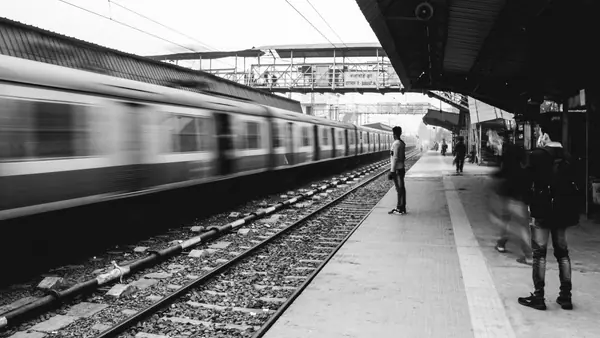
Photo: Shovan Datta / Pexels
If a Rajdhani fare looks higher than you remember, it is probably not a mistake. These trains use a dynamic pricing system, commonly called flexi fare, where the price climbs in steps as berths in a class sell. Book early and you pay closer to the base fare. Book once a class is nearly full and you pay closer to the ceiling.
Which trains actually use flexi fare
The Ministry of Railways introduced the flexi fare scheme in Rajdhani, Shatabdi and Duronto trains from 9 September 2016. In a January 2019 reply in Rajya Sabha (published by PIB), the Ministry said it was discontinuing the scheme on 15 trains with average monthly occupancy below 50% for the full year, and on 32 trains with average monthly occupancy between 50% and 75% during a lean period of three months (February, March and August). The scheme is built into those premium trains only. Ordinary mail and express trains have a fixed fare structure aside from the usual reservation and superfast charges. If you are comparing prices across train types for the same route, check the fare IRCTC shows for each train, because a Rajdhani quote later in the booking window can look expensive next to a fixed-fare train at a similar time. See our guide to Rajdhani, Shatabdi and Vande Bharat for how they compare.
How the price actually steps up
Under the scheme, the fare increases by 10% with every 10% of berths sold. The original maximum was 1.5 times the base fare in Second AC, Sleeper, Second Sitting (reserved) and AC Chair Car, and 1.4 times in 3AC. The 2019 revision reduced the maximum to 1.4 times in all flexi fare classes. The 2019 reply said there was no change in the fare of First AC and Executive Class.
| Class | Maximum fare under the scheme |
|---|---|
| 3AC | 1.4 times the base fare (40% above) |
| 2AC, Sleeper, Chair Car, Second Sitting | 1.5 times originally, 1.4 times since the 2019 revision |
| First AC, Executive Class | No change in fare under the scheme |
Is there a discount when a class is not selling?
Yes. The 2019 revision introduced a graded discount in flexi fare trains, and in Humsafar trains, where class-wise occupancy is below 60% four days before the scheduled departure. The discount is 20% on the last fare if occupancy is up to 70%, 10% on the last fare if it is between 70% and 80%, and nil above 80%, as the release put it. These details are from the 2019 announcement, so check the current fare on IRCTC rather than relying on the exact numbers.
Does flexi fare apply to Tatkal too
The official announcement does not describe how Tatkal is priced on these trains, so this guide does not give a Tatkal rate. Check the Tatkal fare IRCTC shows for your train and class at the time of booking. For the general Tatkal timing rules, see our Tatkal booking time guide.
Is there a way to avoid paying flexi fare
Not within these specific trains, since the pricing is built into how the class sells. What saves money is choosing differently:
- Book early. The advance reservation period sets how far ahead you can book, and booking when the window opens gets you the lowest step before it climbs.
- Compare other trains on the same route, since a train outside the scheme has a fixed fare and may undercut a nearly full Rajdhani.
- Travel a day either side of your original date if your plans allow it, because a less popular day on the same route can sit at a lower step.
Reading a Rajdhani fare before you book
IRCTC and most booking screens show the current fare for a class along with seat availability, so you can see roughly where a class sits before committing. A class showing a high waiting list number combined with a fare near the ceiling usually means that class is close to full, and it may be worth checking a lower class or a different train.
A worked example
Say a Rajdhani's 3AC base fare is Rs 2,000. Taking the 10% step per 10% of berths sold, the fares run Rs 2,000, Rs 2,200, Rs 2,400, Rs 2,600 and Rs 2,800, and the 1.4 times ceiling means the fare does not go above Rs 2,800. A traveller booking while the first block of berths is still unsold is far more likely to catch the lowest fare than someone booking a week before departure, when most of the cheaper steps are usually gone. The numbers here are illustrative, not a real fare.
Planning around it
If you travel on Rajdhani or Shatabdi routes regularly, track how early you normally book. Booking close to departure tends to mean paying near the ceiling. For routes where a Rajdhani is not the only fast option, our trip planner shows other trains on the same route with seat availability, so you can weigh a flexi-fare train against a fixed-fare alternative before you commit.
Flexi fare changes the price only. The seat or berth you get on the train is the same whichever step you paid, and the rules can be revised again, so treat the 2019 figures as the last official announcement we found and check IRCTC for the fare in force.
Use it on your trip
Frequently asked questions
Which trains use flexi fare pricing?
The scheme was introduced in Rajdhani, Shatabdi and Duronto trains from 9 September 2016. A 2019 revision discontinued it on some low-occupancy trains for the full year or for a three-month lean period. Check IRCTC for whether your train currently has it.
How much can the fare increase from the base price?
The fare rises 10% for every 10% of berths sold. The original ceiling was 1.5 times the base fare in most classes and 1.4 times in 3AC. The 2019 revision cut the ceiling to 1.4 times in all flexi fare classes. First AC and Executive Class were not changed by the scheme.
Is there a discount when a class is not full?
A graded discount was introduced in 2019 where class-wise occupancy is below 60% four days before departure: 20% on the last fare up to 70% occupancy and 10% between 70% and 80%. Check the current fare on IRCTC.
Is there a way to avoid paying flexi fare?
Not within these trains directly, since the pricing is part of how the class sells. Booking early, travelling on a quieter day, or comparing a fixed-fare train on the same route usually saves more than waiting.
Sources
Rules and fares change. Check the official source before you travel. Last reviewed 9 November 2026.