Safety Tips for Solo Women Train Travellers
Practical safety advice for women travelling alone by train in India: berth choice, onboard safety features, who to contact, and precautions for overnight trips.
 TrainLiveStatus Desk · Updated · 4 min read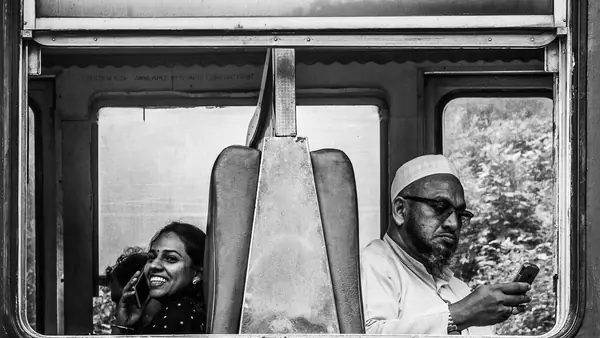
Photo: Christine Blanchet / Pexels


Millions of women travel alone by train in India every year, and the overwhelming majority of journeys are uneventful. That said, a few practical habits make a real difference to comfort and safety, particularly on overnight trips, and it's worth knowing what's actually available on board before you need it.
Which berth is generally considered safest for a solo woman?
A lower berth, ideally in a bay closer to the coach attendant's cabin or the end where the TTE (ticket examiner) is based, is generally preferred. It keeps you near a point of contact through the night and avoids the awkwardness of climbing to an upper or middle berth in a crowded compartment. Many trains also offer a small ladies' quota for solo women or women travelling with children, worth checking and requesting at the time of booking if it's available on your specific train.
What safety features can I rely on onboard?
Many long-distance trains carry an RPF (Railway Protection Force) or GRP escort party, particularly on night runs, and RPF's Meri Saheli teams check on women travelling alone on many routes, and the TTE and coach attendant are both points of contact if something feels wrong. Many trains and stations also have visible CCTV coverage, and RPF personnel patrol platforms, particularly at larger stations and during night hours. None of this replaces basic personal caution, but it does mean help is generally closer than it might feel at 2 am in an unfamiliar coach.
| Resource | How to use it |
|---|---|
| 139 helpline | Dial and press 1 for a security or medical emergency, connects to an agent immediately |
| Coach attendant / TTE | Physically present on the train, can be approached directly in your coach |
| RPF escort | Assigned on many overnight and long-distance trains, ask the TTE if unsure whether yours has one |
| Rail Madad website, or Rail Madad inside the RailOne app | For a written complaint with photos if the issue isn't an immediate emergency |

Who do I contact if I feel unsafe during the journey?
Call 139 and press 1 for security or a medical emergency (the old security number 182 now routes to 139, and the national emergency number 112 also works): this routes straight to an agent rather than through a general menu, and railways typically responds by alerting the RPF or the next station along the route. If the situation isn't an emergency but still needs attention, for example a fellow passenger behaving inappropriately in a low-level but persistent way, approaching the TTE or coach attendant directly is usually the fastest way to get a berth reassignment or have the issue addressed before it escalates. See our complete guide to the 139 helpline for the full menu and when to use each option.
Are there any general precautions for overnight trips?
- Keep valuables secured with a chain lock through your bag's handle, attached to the berth's fixed luggage rack, standard practice on Indian trains regardless of gender.
- Avoid sharing your full itinerary, including where you're staying or travelling alone for how long, with strangers on the train, however friendly the conversation.
- Note your PNR, coach and berth number somewhere accessible (a photo on your phone works), useful for both routine checks and any complaint you might need to make.
- Keep a charged phone and, if possible, a power bank, since a dead phone removes your fastest way to call for help or check live status.
- Arrive at unfamiliar stations with a plan for onward transport already in mind, rather than figuring it out on the platform late at night.

Arriving at your destination late at night
Prepaid taxi and auto counters, where available, are generally the safer option over an unmarked vehicle, particularly at a station you don't know well. Checking your train's live running status in advance means you can arrange a pickup or confirm hotel check-in timing rather than arriving unannounced at an odd hour. Our trip planner also helps you plan a realistic arrival time so you're not caught out by a delay after dark.
Choosing your train and class
Fully air-conditioned classes (3AC, 2AC, 1AC) are enclosed coaches with an attendant on board and less walk-through traffic than Sleeper class, which some solo travellers find more reassuring. Neither class is inherently unsafe, but if it's your first solo overnight trip, an AC class with its more controlled coach access might feel more comfortable while you get used to train travel generally.
Daytime versus overnight journeys
If a route offers both a daytime and an overnight option, a first-time solo traveller unfamiliar with a particular route might prefer the daytime train, simply for the practical reason that arriving at an unfamiliar city in daylight is easier to navigate than arriving at 2 or 3 am. This isn't a rule, plenty of experienced solo travellers manage overnight trains without issue, but it's a reasonable adjustment while you build familiarity with a new route or region.
A final note
None of this is meant to suggest solo train travel in India is unusually risky, it isn't, and the practical steps above are the same kind of ordinary precautions worth taking on any solo trip anywhere. Knowing the helpline, keeping your berth and staff contact in mind, and trusting your own judgement if something feels off covers most of what actually matters.
Use it on your trip
Frequently asked questions
Which berth is generally considered safest for a solo woman?
A lower berth near the coach attendant or TTE's end of the coach is generally preferred, and a reserved ladies' quota, where available on your train, is worth requesting at booking time.
What safety features can I rely on onboard?
Many long-distance trains carry an RPF or GRP escort, plus a TTE and coach attendant who can be approached directly. CCTV coverage is common on trains and at larger stations.
Who do I contact if I feel unsafe during the journey?
Dial 139 and press 1 for an immediate security or medical emergency, which routes to an agent and alerts RPF or the next station. For a non-emergency issue, approach the TTE or coach attendant directly.
Are there any general precautions for overnight trips?
Secure valuables with a chain lock, avoid sharing your full travel plan with strangers, note your PNR and berth details somewhere accessible, keep your phone charged, and have an onward transport plan ready before you arrive.
Sources
Rules and fares change. Check the official source before you travel. Last reviewed 28 September 2026.