How to Plan a Safe Same-Day Train Connection
How much buffer time to leave between two trains on the same day, what to do if the first train runs late, and a realistic backup plan if you miss it.
 TrainLiveStatus Desk · Updated · 5 min read
Photo: dharamveer / Pexels
A same-day connection that looks fine on the timetable can fall apart the moment the first train runs even 40 minutes late, which is common enough that it's worth planning for rather than hoping around. Here's how to give yourself a real margin.
How much buffer time should I leave between two trains?
There's no single official minimum connection time published for passenger-planned journeys the way there is for airline transfers, so treat this as practical guidance rather than a fixed rule. At the same station, changing between two trains, a buffer of at least 45 to 60 minutes is a reasonable starting point on a normal day, and more at a large, busy junction where platforms are far apart or the station is genuinely crowded. If you're changing stations in the same city, add your real transfer time, whether that's a taxi, metro or auto, plus extra on top for traffic, since city transfer times are the least predictable part of the whole plan.
| Connection type | Reasonable buffer |
|---|---|
| Same station, same platform area | 45-60 minutes |
| Same station, large junction | 60-90 minutes |
| Different stations, same city | Real transfer time plus 60-90 minutes margin |
What if my first train is running late?
This is the actual risk in any same-day plan, since the buffer you built in is exactly what a delay eats into first. Track your first train's live running status as you travel rather than only checking once before you leave, since delays often build up gradually through a journey rather than appearing all at once. If it becomes clear the delay will genuinely eat your connection, don't wait until the last minute to decide: check whether a later train on the same onward route exists, and ask IRCTC or the booking counter early what happens to your onward ticket, well before you're actually standing on the platform working it out under pressure.
Should I book connections at the same station only?
It's the safer default, especially for a first attempt at planning a same-day connection, since it removes the city-transfer variable entirely. Changing stations in the same city can absolutely work and sometimes it's the only realistic option, but it adds a layer of uncertainty, traffic, an unfamiliar route to a second station, the chance of misjudging the transfer time, that a same-station change avoids. If you do need to change stations, research the transfer in advance rather than assuming an app cab will simply be waiting.
What's my backup plan if I miss the connection?
Know the answer to this before you travel, not after you've missed the train. Check whether there's a later train on the same route the same day, whether staying overnight near the connecting station is realistic if nothing else runs, and what happens to the unused onward ticket, since a reserved ticket is valid only for the train it was booked on. Ask IRCTC or the booking counter about any refund instead of assuming one. Our trip planner can show alternate trains on your route in advance, so you already know the fallback rather than working it out from scratch while stressed on an unfamiliar platform.
A same-day connection checklist
- Build in real buffer, more than the bare timetable gap, especially at a large junction.
- Track live running status for the first train throughout the journey, not just before you leave home.
- Know your backup train on the same route before you travel, not after you've missed the connection.
- Prefer same-station connections when you have a choice, to remove the city-transfer variable.
- Check the onward train's running days, since a missed weekly service is a much bigger problem than a missed daily one.
If your plan depends on shifting where you board a specific train, that's a related but different question. See our guide on alternate boarding stations for how changing your own boarding point works, which is a separate lever from the connection planning covered here.
Connections through a major junction
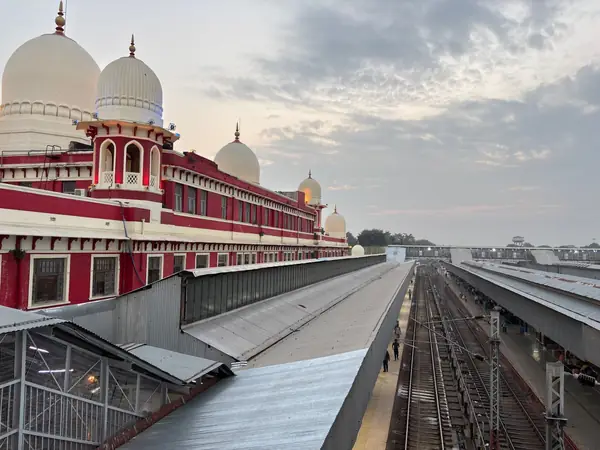
A large interchange like Vijayawada Junction or a similar mega-station handles a heavy mix of long-distance trains, and platforms for your arriving and departing trains can genuinely be a ten-minute walk apart with luggage. At a station like this, treat the lower end of the buffer ranges above as too tight, and check the live board for both trains as you approach, since a platform change announced at the last minute is common at busy junctions and can eat into an already tight walk across.
If the connection is genuinely tight, plan a fallback overnight
For a connection where the only realistic gap is under an hour, or where the first train has a history of running late on that particular route, it's worth deciding in advance whether an unplanned night near the junction station is an acceptable fallback rather than something to figure out on the spot. Many major junctions have retiring rooms bookable through IRCTC for exactly this situation, and knowing that option exists before you travel takes the pressure off treating a missed connection as an emergency. It's a backup, not the plan, but a same-day connection with no fallback at all is the version most likely to go wrong.
Booking two separate tickets versus one connecting itinerary
Indian Railways doesn't move you onto a later train automatically if you miss a connection, the way some international rail systems do. Each leg is its own reservation. IRCTC also offers a connecting journey facility for booking a second ticket on an already booked one, within limits set by Indian Railways. IRCTC's terms say passengers must themselves check the time between the main train's scheduled arrival and the connecting train's scheduled departure, so the responsibility for leaving a safe gap sits with you, not with the booking system. We could not confirm from IRCTC's published terms that a missed connection earns a refund, so do not count on one; ask IRCTC before you book. This is exactly why checking real confirmation chances, realistic gaps and the first train's delay history before you book both legs matters more here than it would somewhere with guaranteed connection protection.
Use it on your trip
Frequently asked questions
How much buffer time should I leave between two trains?
At least 45-60 minutes at the same station on a normal day, more at a busy junction, and real transfer time plus a margin if you're changing stations in the same city.
What if my first train is running late?
Track its live running status through the journey and decide early whether it will eat your connection, rather than waiting until you're on the platform to work out a backup.
Should I book connections at the same station only?
It's the safer default since it avoids city-transfer uncertainty, though changing stations can work if you plan the transfer time realistically in advance.
What's my backup plan if I miss the connection?
Know the next train on the same route, and whether it runs daily, before you travel. The trip planner can show alternate trains on your route in advance.
Sources
Rules and fares change. Check the official source before you travel. Last reviewed 14 November 2026.