Alternate Boarding Stations to Raise Confirmation Odds
How changing your boarding point to an intermediate station can improve waiting list confirmation chances, what IRCTC's rules actually allow, and how to check it.
 TrainLiveStatus Desk · Updated · 5 min read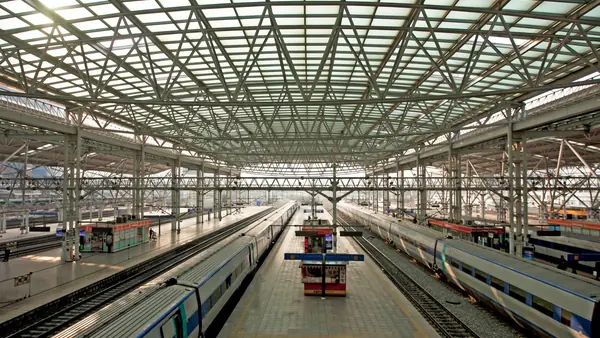
Photo: Jeffry Surianto / Pexels


Most passengers book a train from the station nearest to them without checking whether a different, nearby station on the same route has better availability. It often does, and the reason is simple: a long-distance train's total berth quota is split across several boarding points along its route, not sold entirely from the originating terminus.
Can I book from a station the train doesn't start at?
Yes. Any reserved train can be booked between any two stations it actually stops at, so long as your journey follows the train's direction of travel. If a train starts at Delhi and runs through Mathura, Gwalior and Bhopal before ending further south, you can book Mathura to Bhopal just as validly as Delhi to Bhopal, and it's a completely normal, everyday booking, not a workaround.
Why a different boarding station can have better availability
Indian Railways allocates a portion of a train's total berths specifically to each major boarding station along the route, so that passengers joining partway through the journey aren't shut out by everyone who booked from the origin. A train that's fully booked from its originating station can still have open berths, or a much shorter waiting list, from the next major stop, especially if that stop is in a different city with its own separate demand pattern rather than simply being closer to the origin.
This is most useful around big cities that have more than one long-distance terminal. Delhi has New Delhi, Hazrat Nizamuddin, Anand Vihar and Old Delhi; Mumbai has CSMT, Dadar and Lokmanya Tilak Terminus; each can have meaningfully different availability for the same train on the same date.

Does boarding from a different station change my fare?
Yes, your fare is calculated on the actual distance from your chosen boarding station to your destination, not the train's full route distance. Boarding partway through the journey, from a station closer to your destination, usually costs less than boarding from the origin, since you're travelling a shorter distance. There's no penalty or premium for choosing an intermediate boarding point; it's priced exactly like any other point-to-point journey on that train.
Can I change my boarding point after booking?
Yes, but only on a confirmed or RAC ticket, and only once per booking. Waitlisted tickets cannot have their boarding point changed. From 1 April 2026 the change is allowed up to preparation of the second or final reservation chart, online through IRCTC or at a reservation counter (it used to close 24 hours before departure; since 1 April 2026 it stays open until 30 minutes before departure). The fare is not refunded for the stretch you skip, and I-tickets, current booking tickets and PNRs with VIKALP opted are excluded. This is a different feature from booking a fresh ticket at an alternate station in the first place; it applies to a ticket you already hold.
Do all city terminals share the same waiting list?
Not necessarily. Intermediate stations are often served from separate quotas, such as the pooled quota or remote location quota (shown as PQWL or RLWL), so a waiting list number at New Delhi may tell you little about the waiting list at Hazrat Nizamuddin for the same train. The quota split is set train by train, so compare the availability shown for each boarding station.

How to actually find a better boarding station
Our trip planner groups nearby city terminals together for a given route and shows live seat availability at each one side by side, so you can see at a glance whether a station a short taxi ride away has a confirmed seat or a shorter waiting list than your default station. It also shows connecting-train combinations for routes where no single train has good availability at any boarding point, which is a separate lever worth checking alongside this one.
A worked example
Say you live near Hazrat Nizamuddin and want to travel toward Agra on a train that technically starts at New Delhi. Checking Hazrat Nizamuddin (NZM) as your boarding station instead of New Delhi does two things: it can shorten your commute to the station, and it sometimes shows different, occasionally better, availability than the originating stop, since Nizamuddin has its own separate boarding quota on trains that call there. The same logic applies at the other end of a journey: checking Agra Cantt (AGC) against other Agra-area stops can turn up a shorter waiting list if you're flexible about exactly where you get off.
When this doesn't help
Alternate boarding stations only help when the train genuinely calls at more than one useful stop near you or your destination. On routes with a single practical station at each end, or where every nearby stop shows the same saturated demand, there's no availability gap to exploit, and a connecting-train combination or simply trying a different date is a better use of your time than hunting for boarding-point workarounds that don't exist on that particular route.
A simple way to use this
- Before booking, check availability from every station within reasonable reach of your starting point, not just the closest one.
- Pick the boarding station at the time of booking, because a waitlisted ticket cannot have its boarding point changed later.
- If you hold a confirmed or RAC ticket and your plans shift, you can move the boarding point once, but the fare for the skipped stretch is not refunded.
- The window now stays open until 30 minutes before departure, but do it early: the change has to reach the second chart so the TTE expects you at the new station.
Use it on your trip
Frequently asked questions
Can I book from a station the train doesn't start at?
Yes. You can book any reserved train between any two stations it actually stops at, in the direction it travels. This is a normal booking, not a special exception.
Does boarding from a different station change my fare?
Yes, the fare is based on the actual distance from your boarding station to your destination. Boarding partway through the route usually costs less than boarding from the origin.
Can I change the boarding point after booking if my ticket is still on the waiting list?
No. Boarding point change is allowed only on confirmed or RAC tickets, once per booking, up to 30 minutes before departure. If you are waitlisted, choose the better boarding station when you book, since it cannot be changed later.
Do all city terminals share the same waiting list?
Not always. Intermediate stations are often served from separate quotas such as the pooled or remote location quota, so availability can differ between two terminals in the same city for the same train and date. Compare what each boarding station shows before you book.
Sources
- IRCTC: Boarding Point Change
- Indian Railways: Reservation Rules
- Oneindia: boarding point change up to 30 minutes before departure (Apr 2026)
Rules and fares change. Check the official source before you travel. Last reviewed 26 September 2026.