IRCTC E-Catering vs Zomato/Swiggy: What's Actually Available
A straight comparison of IRCTC e-catering and food delivery apps for train journeys: coverage, pricing, seat delivery and what to do if it fails.
 TrainLiveStatus Desk · Updated · 5 min read
Photo: Go Journal / Pexels
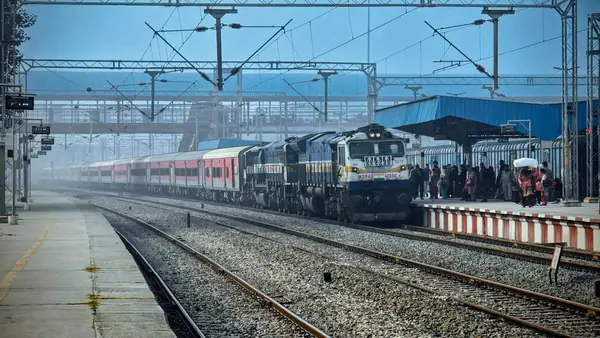
Two genuinely different food systems now exist for train travellers: IRCTC's own e-catering network, and food delivery apps like Zomato and Swiggy, whose train orders are plugged into IRCTC e-catering at a growing list of stations. They overlap in what they solve, hot food during a journey, but differ enough in coverage, pricing and reliability that picking the wrong one can mean going hungry.
IRCTC e-catering vs general food delivery: the comparison
| IRCTC e-catering | Zomato / Swiggy | |
|---|---|---|
| Coverage | Curated list of stations with railway-approved vendors, strongest on major routes | Wherever the app has active restaurant partners near that station, which can be wider in big cities, thinner on smaller stations |
| Order lead time | Needs advance notice before your train reaches the station, typically an hour or more depending on the vendor | Can often be ordered closer to arrival (around 30 minutes before the station at the time of writing), but depends on restaurant load |
| Delivery to your seat | Vendor or their runner brings the order to your coach and seat/berth number on the platform | Train orders are placed with your PNR and delivered to your coach and seat, the same way as IRCTC e-catering, since they run through the IRCTC tie-up |
| Menu style | Often railway-approved thalis, regional meals, standard travel-friendly packaging | Full restaurant menus, more variety, but not always packaged for eating on a moving train |
| Cancellation if the train is delayed | Generally more used to adjusting for delayed trains, since it's built around railway schedules | Also tied to your PNR and train, but check live status yourself, since a restaurant may not adjust for a large delay |
What's the difference between e-catering and pantry car food
Pantry car food is prepared and served directly on the train by the onboard catering staff, available only on trains that actually carry a pantry car and typically limited to a set menu. E-catering, by contrast, is ordered from outside vendors near a specific station and delivered to your seat when the train halts there, which works on trains without a pantry car and generally offers more variety and fresher options than a galley kitchen working through a long journey.
Is e-catering cheaper than ordering from Zomato at a station
Pricing depends heavily on the specific vendor and city rather than the platform itself; neither system is reliably cheaper across the board. IRCTC e-catering vendors are railway-approved and often price close to standard thali or meal-box rates for that region, while Zomato and Swiggy pull from full restaurant menus where pricing varies by restaurant, plus a delivery fee that can add up for a single-item order. If cost is your main concern, compare the actual menu and total, including any delivery charge, rather than assuming one system is inherently the budget option.

Can I order e-catering for a Sleeper class ticket
Yes. E-catering is available for any reserved class, sleeper or AC, since it's tied to your PNR, train and station stop rather than to a specific class of ticket. Unreserved passengers without a PNR generally cannot use it. This is one of e-catering's clearer advantages over pantry car food, which exists only on trains that carry a pantry car.
What if the vendor doesn't show up at the station
Both IRCTC e-catering and food delivery apps have customer support for a missed or failed delivery, usually leading to a refund if the order genuinely wasn't delivered. In practice, the fix that actually matters in the moment is different: if you're mid-journey and the vendor missed the stop, you need food now, not a refund processed later, so it helps to have a backup plan, station food stalls, or carrying some dry snacks, especially on a longer overnight leg with few remaining stops.
Practical tips for either option
- Order with real buffer. Place your order well before your train is due at the delivery station, factoring in the current live delay rather than the original timetable.
- Keep your phone reachable. Delivery vendors on both systems typically call or message to coordinate the handoff as the train approaches the platform.
- Have a station food backup for longer journeys, since even a reliable vendor can occasionally miss a very short halt.
- Check reviews for that specific station's vendors rather than the app in general, since quality varies station to station more than platform to platform.
Dietary needs and special requests
IRCTC e-catering vendors generally list vegetarian, non-vegetarian and sometimes Jain food options clearly at order time, since the system is built around common Indian travel dietary categories. Zomato and Swiggy, drawing on full restaurant menus, can offer more specific customisation, allergy notes, spice level, ingredient swaps, but this depends entirely on the individual restaurant partner rather than being standardised across the platform.

Which one to pick, in short
If your train stops at a major junction with a good e-catering vendor list, and you want a straightforward regional meal delivered with minimal fuss, IRCTC e-catering is usually the smoother option. If you're passing through a big city and want more choice, or the station in question has thin e-catering coverage, checking Zomato or Swiggy for that specific stop is worth the extra step. Many frequent travellers end up using both depending on the route, rather than committing to one system for every journey.
Neither system is run by us; we don't handle food ordering, ticket booking or PNR status. What we do offer is live running status for your train, so you know exactly when to place your order regardless of which platform you use, and our running status guide explains how to read a delay accurately before a food handoff. For a deeper look at the food delivery app side specifically, see our Zomato and Swiggy on trains guide.
What to pack
Use it on your trip
Frequently asked questions
What's the difference between e-catering and pantry car food?
Pantry car food is cooked and served onboard by railway catering staff, only on trains with a pantry car. E-catering is ordered from outside vendors near a station and delivered to your seat, working on any train and typically offering fresher, more varied food.
Is e-catering cheaper than ordering from Zomato at a station?
Not reliably either way. Pricing depends on the specific vendor and city; compare the actual menu total including any delivery fee rather than assuming one platform is always cheaper.
Can I order e-catering for a Sleeper class ticket?
Yes. E-catering works for any reserved class since it's tied to your PNR, train and station stop, not the ticket class, and it works on trains that have no pantry car.
What if the vendor doesn't show up at the station?
Both systems offer customer support and usually a refund for a missed delivery, but that doesn't solve immediate hunger mid-journey. Keep a station food or snack backup ready, especially on longer overnight legs.
Sources
Rules and fares change. Check the official source before you travel. Last reviewed 1 October 2026.