Kumbh Mela by Train: Special Trains and Station Crowds
Kumbha Express actually runs to Haridwar, not Prayagraj. Real trains to Prayagraj Jn, how mela special trains work, and crowd-control timing.
 TrainLiveStatus Desk · Updated · 5 min read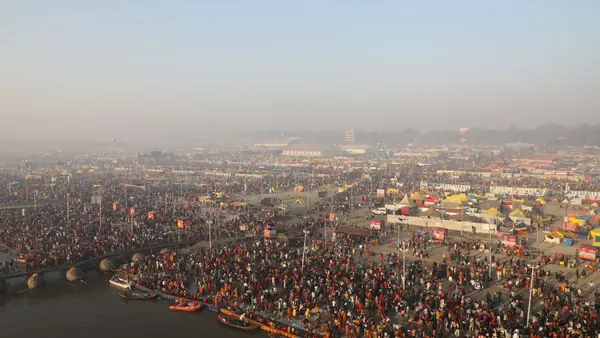
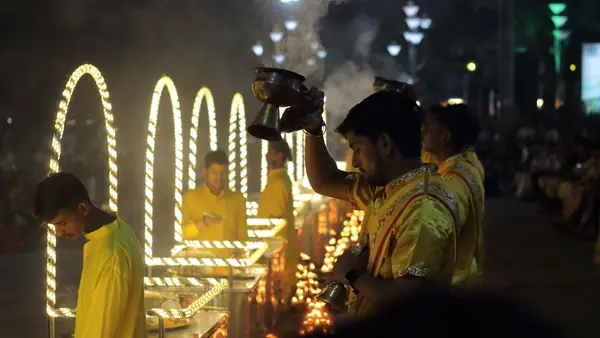
Photo: Ashish Kumar Pandey / Pexels


If you searched for "Kumbha Express running status," it's worth clearing up first: the train actually named Kumbha Express (13037/13038) runs between Howrah and Dehradun via Haridwar, not to Prayagraj. It carries the name because Haridwar is itself one of the four Kumbh Mela sites, on rotation with Prayagraj, Nashik and Ujjain. For a Kumbh Mela at Prayagraj specifically, you're looking for regular trains into Prayagraj Jn plus whatever temporary special trains are announced for that mela.
Kumbha Express: what it actually is
| Train | Route | Runs | Duration |
|---|---|---|---|
| 13037 Kumbha Express | Howrah to Dehradun, via Haridwar | Mon, Wed, Thu, Sat, Sun | About 29h 10m |
| 13038 Kumbha Express | Dehradun to Howrah, via Haridwar | Mon, Tue, Thu, Fri, Sun | About 29h 30m |
Reaching Prayagraj for the Kumbh Mela
Prayagraj Jn (PRYJ) is the main station serving the mela grounds at the Sangam, alongside Prayagraj Chheoki, Prayagraj Rambag and Prayagraj Sangam, which are additional stations used specifically to spread crowd load during a mela. Regular long-distance trains from Kolkata connect well, including the Howrah Rajdhani and Poorva Express, both of which call at Prayagraj Jn on their Howrah to New Delhi run on a normal timetable.
Are Kumbh special trains numbered differently
Yes, typically. During a major Kumbh or Ardh Kumbh, Indian Railways runs a large number of temporary special trains on top of the regular timetable, usually carrying five-digit numbers starting with 0, the range used for special trains, rather than the regular numbers of permanent trains. These specials are announced by the concerned zonal railways in the weeks before the event and are not searchable in advance the way a permanent train is, since they only exist for the mela period.

Which stations see the worst crowding
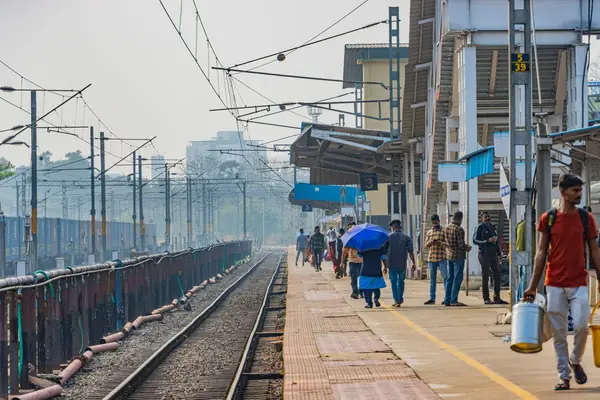
During a major mela, Prayagraj Jn itself sees the heaviest crowding, along with the roads and approach areas leading to the Sangam. The additional stations, Chheoki, Rambag and Sangam, exist specifically to divert some passenger load away from the main junction, and railway authorities typically direct specific trains or specific days to specific stations as part of crowd management. Check which exact station your ticket or special train uses; during a mela this can differ from the station you'd normally expect for a Prayagraj journey.
How early to arrive given crowd-control queues
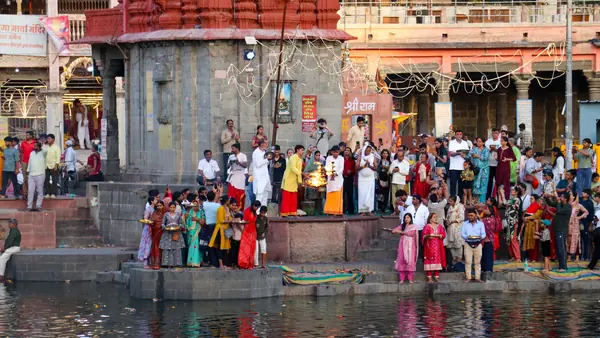
Mela-period crowd control at major stations like Prayagraj typically involves holding areas, barricaded queues and staggered platform access, all of which take real time beyond a normal station's usual flow. Arriving with the same buffer you'd use for a regular busy station is not enough during peak mela days; plan for significantly more time than usual to actually reach your platform; local authorities and railway announcements closer to the event give specific guidance for each mela's crowd management plan, and it is worth checking these rather than relying on a general estimate.
Is live status reliable for temporary special trains
Live running status becomes more reliable once a special train has operated a few times and built up a running history, similar to any train. In the very early days of a newly introduced mela special, expect the predicted delay and confirmation accuracy to be rougher than for an established train, since there's less historical data behind the estimate. For permanent trains serving Prayagraj on the regular timetable, live status works exactly as it does on any other route.

Booking and travel notes for a mela trip
- Book as early as your dates allow. Mela periods draw enormous demand well beyond normal festival-season levels, and regular trains into Prayagraj fill fast even before special trains are announced.
- Check for mela-specific special trains in the weeks leading up to your travel date, since they can meaningfully improve availability on top of the regular timetable.
- Confirm which Prayagraj station your ticket uses and plan your onward route to the Sangam accordingly, since the different stations are not close to each other.
- Watch your train's live running status as your date approaches, especially for any special train, since first-week schedules can shift.
What to carry for a mela trip
Beyond the usual travel essentials, a mela trip benefits from a few specifics: a printed copy of your ticket and ID in case connectivity is patchy in dense crowd areas, a small first-aid kit, and comfortable, sturdy footwear given the amount of walking between station, accommodation and the Sangam itself. Keep valuables minimal and secured, since large crowds are also where petty theft is most likely, and agree on a meeting point with your group in case of separation, a real possibility given the scale of mela crowds.
Regular trains that already serve Prayagraj
Outside any special mela scheduling, Prayagraj Jn has strong regular connectivity as one of Uttar Pradesh's major junctions. Trains from Kolkata, including the Rajdhani Express and Poorva Express, from Delhi, and from Mumbai all call at Prayagraj Jn on their normal timetables, since it sits on key trunk routes regardless of festival season. During a mela, these regular services see far higher demand than usual, so book them with the same urgency as you would a mela special, well before your travel date.
Why the Kumbha Express name causes confusion
Names like Kumbha Express reflect the route's pilgrimage significance rather than a live connection to wherever the current mela happens to be held. The Kumbh rotates between Haridwar, Prayagraj, Nashik and Ujjain over a roughly twelve-year cycle, with Ardh (half) Kumbh melas at some sites in between. A train named for one pilgrimage site's mela tradition, in this case Haridwar, will not automatically serve a different site's mela in a different year, which is exactly the mismatch behind the Kumbha Express search.
For general guidance on tracking any train during a busy period, see our live running status guide, and for what to do if a heavily booked train shows no confirmed seats, our trip planner checks alternative boarding stations and connections for the Prayagraj route.
Use it on your trip
Frequently asked questions
Are Kumbh special trains numbered differently from regular services?
Yes, typically. Temporary mela specials usually carry numbers in dedicated special-train ranges, separate from a permanent train's regular number, and only run for the duration of the mela.
Which stations see the worst crowding during the mela?
Prayagraj Jn itself and its approach roads see the heaviest crowding. The additional stations, Chheoki, Rambag and Sangam, exist to spread some of that load, so check which one your journey actually uses.
How early should I arrive at the station given crowd-control queues?
Significantly earlier than for a normal busy station. Mela crowd control involves holding areas and staggered platform access that take real extra time; check specific guidance closer to the event rather than using a normal buffer.
Is live status reliable for these temporary special trains?
It improves once a special train has run a few times and built up history, similar to any train. In its first days of operation, expect the delay prediction to be less precise than for an established service.
Sources
Rules and fares change. Check the official source before you travel. Last reviewed 5 October 2026.