Sairang Express derailment: the brake tests crews must run
After the Kolkata-Sairang Express derailment near Guwahati, the Railway Board ordered a brake test drive from 12 to 18 November. What the tests check.
 TrainLiveStatus Desk · Updated · 3 min read
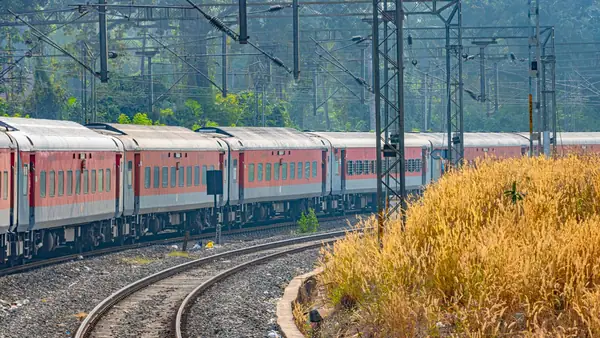
After the Kolkata-Sairang Express derailed near Guwahati on 11 November, the Railway Board told zonal railways that running crews must carry out braking tests after taking over a train. A safety drive from 12 to 18 November checks whether locomotive crews are doing the brake feel and brake power tests. The details come from a PTI report carried by Livemint. The probe is preliminary, and the report says it has not yet established who or what caused the brake problem.
What the preliminary probe found
A six-member probe team found that the brake pipe (BP) angle cock in the locomotive was in an isolated condition. The report describes the angle cock as a key component for applying the brakes in the coaches, and links the isolated cock to a malfunctioning main braking system.
The report says a possible communication gap between station staff and the train crew may explain it. The train used to change locomotives at Guwahati, and station staff isolated the angle cock during that swap. After electrification of the route was completed, the locomotive change at Guwahati stopped. According to an official cited in the report, the staff member responsible for the isolation was on leave when that happened, and on returning on 11 November reportedly followed the old procedure.
The official cited in the report said the crew may have skipped the mandatory tests, or may have relied on the regenerative braking system during the checks. The crew may only have found the main brake was not working when they tried to stop near the loop line. The report does not confirm any of these points. Treat the cause as unconfirmed until the probe is complete.
What the Railway Board has ordered
In its 11 November communication, the Board asked zonal railways to make sure running crews conduct braking tests after taking handover of a train, following the established procedure. It also ordered the safety drive between 12 and 18 November. Any discrepancies must be compiled and sent to the Board by 20 November.
The two tests in plain language
The report sets out two tests the locomotive crew must run. The speeds below are the ones the report gives.
| Test | What the crew does | Speeds in the report |
|---|---|---|
| Brake feel test | Brings the train to 15 kmph, then applies the brakes by reducing brake pipe pressure with the main A-9 system | Speed should fall to around 10 kmph |
| Brake power test, passenger | Accelerates a passenger train to 60 to 70 kmph, then applies the brakes | Speed should fall to 30 to 35 kmph |
| Brake power test, goods | Same test on a goods train, run at 40 to 50 kmph | Speed should fall to 20 to 25 kmph |
The assistant loco pilot has a part in this too. The assistant monitors the tests, makes sure the locomotive pilot carries them out, and reminds the pilot if needed.
Who this affects
The order is aimed at running crews and the zonal railways that supervise them. The report does not describe changes to train timings, cancellations or fares. Passengers have no new step to take.
The train involved
The PTI report does not give the train number. In our database the service runs as 13125 KOL Sairang Express, from Kolkatta Terminal (KOAA) to Sairang (SANG) on Tuesday, Wednesday and Saturday, with a journey time of 31 hours 45 minutes. The derailment was on 11 November, a Wednesday, which is a running day for that train in our data. Check the number on your own ticket before you rely on the link.
What travellers should do
- Check the live status of your train on its page before you leave, and again at the station.
- If you need help on board, call 139, the national rail helpline (press 1 for security or medical help). For any emergency, 112 also works.
- Do not treat a rumour as an official order. The Livemint report is our only source for the Railway Board order.
Related reading
Our earlier coverage of the derailment is in Kolkata-Sairang Express Derails at Digaru, Near Guwahati, and of the drive in Brake-test safety drive after the Sairang Express derailment. For the helpline, see the 139 helpline guide.
Where is your train right now?
Live position, expected arrival at every stop and the delay history of the last few weeks.
Use it on your trip
Frequently asked questions
When does the brake-test safety drive run?
According to the PTI report carried by Livemint, the drive runs from 12 to 18 November 2026. Discrepancies found during the drive must be sent to the Railway Board by 20 November.
What is the brake feel test?
The crew brings the train to 15 kmph and applies the brakes by reducing brake pipe pressure with the main A-9 system. The speed should fall to around 10 kmph, which shows whether the brakes have worked.
Does the drive change my train's timetable?
The report does not describe any change to timings, cancellations or fares. It covers braking tests for locomotive crews. Check the live status of your train before you travel.
What caused the derailment?
The preliminary probe found the brake pipe angle cock in the locomotive was isolated, but the report says the probe has not established who or what caused it. Treat any single explanation as unconfirmed until the probe is complete.
Sources
Rules and fares change. Check the official source before you travel. Last reviewed 17 November 2026.