What Actually Makes Vande Bharat Different From Normal Trains
A myth-busting look at Vande Bharat's real engineering differences: self-propelled design, safety systems, ride quality, and how much time it actually saves.
 TrainLiveStatus Desk · Updated · 4 min read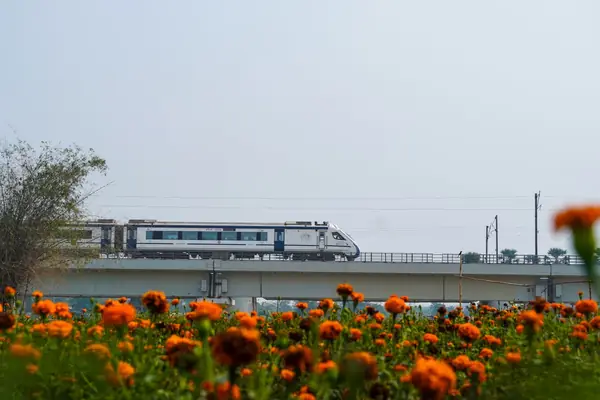


Vande Bharat gets called India's answer to a bullet train often enough that the actual engineering behind it gets lost. Strip away the marketing and there are a handful of real, specific differences from a normal Express train, and a few things that get exaggerated.
It doesn't need a separate locomotive
This is the single biggest technical difference. A normal Express or Superfast train is a locomotive hauling a string of unpowered coaches; if the engine fails, the whole train is stuck. Vande Bharat is a self-propelled train set, an EMU (electric multiple unit) design where the traction motors sit under multiple coaches through the rake instead of in one engine at the front. That's the same basic idea used by most modern high-speed trains abroad, such as Japan's Shinkansen, while India's Rajdhani and Shatabdi are still locomotive-hauled, and it's why Vande Bharat trains can accelerate and brake faster than a locomotive-hauled train of similar length: more of the train's wheels are powered, so the pulling force is spread out instead of concentrated at one end.
Safety systems normal trains don't have
Vande Bharat rakes are built with the Kavach automatic train protection system, which is designed to stop a train from passing a red signal or running into another train, automatic fire and smoke detection in every coach, and a GPS-based passenger information system that displays and announces the next station inside the coach. Older coaching stock is being retrofitted with some of these features route by route, while newer Vande Bharat rakes come with them built in.

Is the ride actually smoother?
Yes, for two real reasons. First, the coaches sit on air suspension bogies designed specifically for this train set, which absorb track irregularities better than the older bogie designs still common on much of the network. Second, because power is distributed through the rake rather than concentrated in a locomotive, there's less of the jerk and slack-action you feel in a long locomotive-hauled train when it starts, brakes, or goes over a gradient change. None of this means the ride is silent or flawless, track quality on a given section still matters more than the train, but on well-maintained track the difference from an older rake is noticeable.
Does it actually save significant time?
Sometimes meaningfully, sometimes only a little, and that's worth being honest about. On routes where Vande Bharat replaced a slower Express with the same number of stops, the time saving is real and often runs to an hour or more over a few hundred kilometres, mostly from faster acceleration and shorter dwell times at stations rather than a much higher top speed. On routes where track conditions, signalling, or a busy shared corridor limit speeds anyway, a Vande Bharat isn't dramatically faster than a good Shatabdi covering the same distance. Check the actual scheduled travel time on the train's own page before assuming it will be much quicker than the alternative.
| Feature | Vande Bharat | Typical locomotive-hauled Express |
|---|---|---|
| Propulsion | Self-propelled, distributed motors | Separate locomotive pulls unpowered coaches |
| Seating | Chair car and executive chair car, no sleeper on most routes | Sleeper, AC and general classes |
| Doors | Automatic, plug-type | Manual, often left open between stations |
| Catering | Optional, chosen and paid for at booking | Pantry car optional, pay separately |
| Journey type | Daytime, single-day trips | Both day and overnight |
What it isn't
Vande Bharat is not a bullet train and doesn't run on dedicated high-speed track, it shares the same rails as freight and every other passenger train on the route, which is the real ceiling on how fast it can go. It's also not built for overnight travel on most routes: seating is chair car and executive chair car, not sleeper berths, so it suits same-day journeys of up to roughly eight to ten hours rather than long overnight hauls. A handful of longer routes exist, but check the scheduled arrival time before booking if you were expecting to sleep through the journey.
How to check if it actually helps on your route
The honest way to decide is to compare the Vande Bharat's scheduled time against the fastest alternative on the same route, not against the slowest one. Look up the train, for example the Secunderabad-bound Vande Bharat (20101), and check its live running status and delay history alongside the older Express or Shatabdi covering the same stretch on the trip planner. Reading the delay history correctly matters here too, see our guide on how to read live running status for what the numbers actually mean. On some corridors the saving is an hour or more; on others it's closer to twenty or thirty minutes, still worth it for the ride quality and amenities, just not a dramatic leap.
The bottom line
What's genuinely different is under the floor, not in the branding: a distributed-power train set with better acceleration, braking and ride quality than a locomotive-hauled rake, plus safety and passenger-information systems built in rather than retrofitted. What's oversold is the idea that it's dramatically faster everywhere; the time saving depends heavily on the route and the track it runs on.
Use it on your trip
Frequently asked questions
Does Vande Bharat need a separate locomotive like other trains?
No. It's a self-propelled train set with traction motors distributed through multiple coaches, unlike a normal Express which is a locomotive hauling unpowered coaches.
What safety features does it add over older trains?
Built-in fire and smoke detection in every coach, Kavach automatic train protection, and a GPS-based passenger information display, features that older coaching stock is only gradually being retrofitted with.
Is the ride genuinely smoother, and why?
Generally yes, due to air suspension bogies and less jerk from distributed power, though track quality on a given section still matters more than the train itself.
Does it actually save significant travel time on most routes?
It varies by route. Where it replaced a slower Express with similar stops, the saving can be an hour or more; on routes limited by shared track and signalling, the saving is smaller. Compare the scheduled time on the train's own page rather than assuming.
Sources
Rules and fares change. Check the official source before you travel. Last reviewed 28 September 2026.