Best Window-Seat Train Routes for Scenery in India
The Konkan line, Kalka-Shimla and Darjeeling toy trains, and the new Katra-Srinagar route: which side to sit on, when to go, and whether Vistadome is worth it.
 TrainLiveStatus Desk · Updated · 4 min read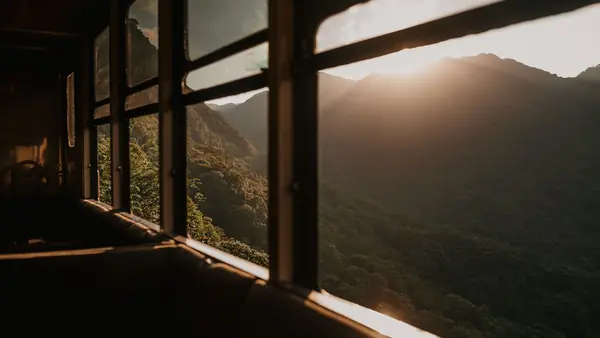
Photo: Jonathan Borba / Pexels


Most train journeys in India are about getting somewhere. A handful are worth taking for the journey itself. These are the routes where the window seat matters as much as the destination, with which side to book and what to expect from each one.
Konkan Railway: Mumbai to Goa
The Konkan line runs along the Western Ghats through more than 90 tunnels and across river bridges, with the Sahyadri hills on one side and glimpses of the Arabian Sea coast on the other at various points. The Vande Bharat (22229) and Tejas Express (22119) both run this route in daylight: the current timetable lists about 10 hours 35 minutes for the Vande Bharat and 11 hours 30 minutes for the Tejas, since it follows the slower Konkan monsoon timetable (15 June to 20 October in 2026). Book a window seat on the right-hand side heading south for the best sea and river views. In monsoon, roughly June to October, this route is at its greenest, with waterfalls pouring down beside the track, though trains run to a slower monsoon timetable during this window.
Kalka to Shimla: the toy train
The narrow-gauge Himalayan Queen (52455) and the Shivalik Deluxe (52451) climb from the plains at Kalka to Shimla at over 2,000 metres, through more than a hundred tunnels and 800-plus bridges on a line built in 1903. It's slow by design, around five hours to cover 96 km, and that's the point: the pace lets you take in pine forest, terraced hillsides and small hill villages the road route past on the way up. Either side of the train has views on this route, since the line switchbacks through the hills rather than following a single valley.

New Jalpaiguri to Darjeeling: the Himalayan toy train
The Darjeeling Himalayan Railway, another UNESCO-listed narrow-gauge line, climbs from New Jalpaiguri (NJP) up into the tea-growing hills of the Darjeeling district. Services like the NJP DJ Passenger (52541) take around seven and a half hours to cover a relatively short distance, climbing through tea gardens and past the famous Batasia Loop, where the track spirals back on itself to gain height. On a clear day, and there's no guarantee of one given how much this route depends on weather, distant Kanchenjunga views are the reward toward the upper stretches.
Katra to Srinagar: crossing the Chenab Bridge
The newest entry on this list and arguably the most dramatic engineering along the way, the Vande Bharat (26401) from Jammu Tawi to Srinagar via Katra crosses the Chenab Bridge, the world's highest railway arch bridge, and threads through the Pir Panjal range via a long sequence of tunnels. The full run takes about 4 hours 50 minutes, of which roughly three hours is the Katra to Srinagar stretch, and it opened up a section of the Kashmir valley to rail travel that was previously reachable only by road. Weather and cloud cover in the mountains affect visibility more here than on the other routes on this list, clear winter mornings tend to give the best views of the gorge below the bridge.
Approach to Kathgodam: gateway to Kumaon
Trains like the Ranikhet Express run from the plains up to Kathgodam (KGM), the railhead for Nainital and the wider Kumaon hills. The scenery here builds gradually rather than all at once: flat plains give way to sal forest and the first low hills in the last hour or so before Kathgodam, a gentler preview of the Himalaya rather than the dramatic gorge-and-bridge scenery of the Kashmir or Kalka-Shimla routes. It suits travellers heading on to Nainital or Corbett National Park by road from the station.

Is a Vistadome coach worth it
Where available, a Vistadome coach, with larger windows, some glass roof panels and rotating seats, adds real value on routes like the Konkan line and a few Himalayan approaches where these coaches have been introduced. It costs more than a standard chair car or AC seat, and the premium is easiest to justify on routes where the scenery is the whole point of the trip rather than a bonus. Check whether your specific train and date has a Vistadome coach before assuming one is available, it isn't fitted to every rake on every one of these routes.
Best season for clear views
For the Himalayan routes (Shimla, Darjeeling, Kashmir), October to March gives the clearest skies, though winter mornings can start foggy at lower elevations before clearing. For the Konkan line, the monsoon months are greenest but come with the slower monsoon timetable, while the post-monsoon and winter months, November to February, balance good visibility with normal running times.
Planning around one of these as the main event
If a scenic route is the reason for your trip rather than a leg along the way, build slack into the rest of the itinerary around it. A delayed toy train or a fogged-in Himalayan morning is a real possibility, and treating the ride as the destination rather than squeezing it between two tightly booked connections makes for a far less stressful day. Pack for temperature swings on the hill routes too, mornings at altitude can be considerably colder than wherever you started.
Use it on your trip
Frequently asked questions
Which route has the most consistently scenic stretch?
The Konkan Railway between Mumbai and Goa is the most consistently scenic across its full length, with tunnels, bridges and coastal views for most of the journey, and it runs on broad gauge with faster, more frequent daytime trains than the narrow-gauge hill routes.
Which side of the train should I book for the best views?
On the Konkan line, the right-hand side heading south (from Mumbai toward Goa) generally has the better sea and river views. On the switchback hill routes like Kalka-Shimla, both sides have views since the line curves through the hills rather than following one valley.
Is a Vistadome coach worth it for these routes?
Where it's fitted, yes, larger windows and some glass roof panels add real value on scenery-focused routes. It costs more and isn't available on every train or date, so check before assuming one is fitted to your service.
Which season offers the clearest views?
October to March for the Himalayan routes, when skies are generally clearer. The Konkan line is greenest during the June-October monsoon, though it runs a slower timetable in that window.
Sources
Rules and fares change. Check the official source before you travel. Last reviewed 26 September 2026.