Mumbai-Ahmedabad Bullet Train: Current Project Status
A status tracker for the Mumbai-Ahmedabad bullet train: what's built, the design speed, why the timeline keeps shifting, and where to check official updates.
 TrainLiveStatus Desk · Updated · 4 min read

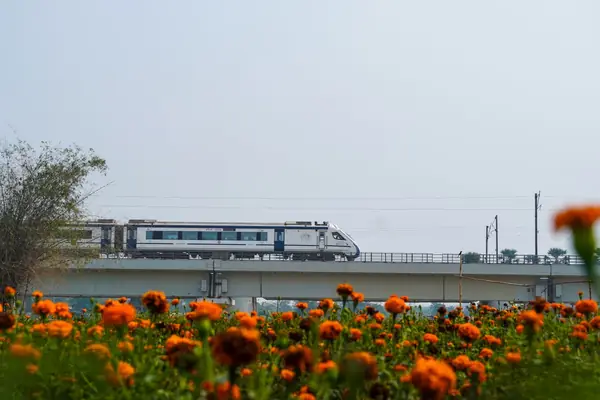
Photo: Vijit Bagh / Pexels
The Mumbai-Ahmedabad High Speed Rail corridor, commonly called India's bullet train project, is the country's first dedicated high-speed line, built and overseen by the National High Speed Rail Corporation Limited (NHSRCL) with Japanese technical and financial support based on the Shinkansen system. It's a genuinely large undertaking, and like most infrastructure projects of this scale, its timeline has moved more than once since it was first announced.
What the corridor covers
The line runs roughly 508 km between Mumbai and Ahmedabad, passing through Gujarat and Maharashtra with stations planned at several points along the route, including Vadodara and Ahmedabad, with the Mumbai end terminating near Bandra-Kurla Complex rather than at the existing Mumbai Central station used by conventional trains today. It's an entirely new, dedicated line, not an upgrade of the existing broad-gauge track those stations currently serve.
Which sections are complete so far
At the time of writing, the Gujarat stretch of the corridor, roughly from Surat through to Vadodara and on toward Ahmedabad, has seen the most visible progress, with substantial viaduct and civil works completed across large sections. The Maharashtra end, particularly the approach into Mumbai, has been the more complex and slower-moving part of the project, largely because of the undersea and underground tunnel section needed to bring the line into the city near Bandra-Kurla Complex, along with land acquisition challenges that affected early progress more in Maharashtra than in Gujarat.
What is the realistic opening timeline now
This is the one figure we won't pin down here, deliberately. The project's target completion date has shifted multiple times since the corridor was first announced, from an original early-2020s goal, and each revision has been tied to specific, genuine construction milestones like the Mumbai tunnel and land acquisition rather than being arbitrary. Rather than repeat a date that's likely to be outdated by the time you're reading this, check NHSRCL's official site or recent Ministry of Railways and PIB announcements for the current target, and treat any date as an estimate that construction progress can still move.

How fast will the bullet train actually run
The line is designed for a maximum speed of 350 km/h, with an expected operating speed for revenue services around 320 km/h once it's running, broadly in line with Japan's Shinkansen technology the project is based on. At that speed, the full Mumbai-Ahmedabad run is expected to take a little over two hours for the fastest services, compared to roughly five and a half to seven hours on the fastest conventional trains today, such as the current Vande Bharat and Shatabdi services on this route.
| Metric | Bullet train (planned) | Fastest current option |
|---|---|---|
| Design/operating speed | 350 km/h design, ~320 km/h operating | Up to 130 to 160 km/h on cleared stretches |
| Mumbai-Ahmedabad journey time | Roughly 2 hours (fastest service) | About 5.5 to 7 hours currently |
| Track | New dedicated standard-gauge high-speed line | Existing broad-gauge network |
Will regular trains on this route still operate afterward
Yes. The bullet train runs on entirely separate, dedicated track from the existing broad-gauge network, so conventional express, superfast and Vande Bharat services between Mumbai and Ahmedabad are expected to continue operating as they do now, serving different stations, price points and passenger needs. The bullet train is additional capacity and a much faster premium option, not a replacement for the existing network on this corridor.
Where to check for the latest status
For construction milestones, funding updates and any revised timeline, NHSRCL's official website and press releases through the Ministry of Railways and PIB are the most reliable sources, more so than older news articles that may be reporting a target date that's since moved. If you're researching this project for planning purposes rather than general interest, checking the date on whatever source you're reading matters more than usual here, given how much this specific timeline has shifted.

Where is your train right now?
Live position, expected arrival at every stop and the delay history of the last few weeks.
Why the timeline keeps moving
Large rail infrastructure projects almost everywhere run behind their first announced date, and this corridor is no exception. Land acquisition in Maharashtra took longer to resolve than in Gujarat in the project's early years, and the undersea and underground tunnel section required to bring the line into Mumbai near Bandra-Kurla Complex is a genuinely complex piece of engineering that doesn't compress easily. None of this is unusual for a first-of-its-kind project in a country building this kind of high-speed line for the first time, but it does mean treating any single date as fixed is a mistake.
What this means if you travel the route regularly
If you commute or travel often between Mumbai and Ahmedabad, the practical takeaway is to keep using the current network and not factor the bullet train into near-term plans at all. Once it does open, expect a premium fare relative to existing Vande Bharat and express services, similar to how high-speed rail is priced in other countries relative to conventional rail on the same corridor, though official fares haven't been finalised this far out and shouldn't be treated as confirmed until NHSRCL publishes them closer to launch.
Use it on your trip
Frequently asked questions
Which sections of the corridor are complete so far?
At the time of writing, the Gujarat stretch, roughly Surat to Vadodara and on toward Ahmedabad, has seen the most progress with substantial civil works complete. The Mumbai end, including the tunnel section into the city, has moved more slowly.
What is the realistic opening timeline now?
The target date has shifted several times since the project was announced and depends on remaining construction, especially the Mumbai tunnel section. Check NHSRCL's official site or recent PIB announcements for the current target rather than an older news report.
How fast will the bullet train actually run?
The line is designed for 350 km/h with an expected operating speed around 320 km/h, cutting the Mumbai-Ahmedabad journey to a little over two hours once running, compared to about 5.5 to 7 hours on the fastest trains today.
Will regular trains on this route still operate afterward?
Yes, the bullet train uses entirely separate dedicated track. Existing broad-gauge express, superfast and Vande Bharat services between Mumbai and Ahmedabad are expected to keep running as they do now.
Sources
Rules and fares change. Check the official source before you travel. Last reviewed 1 October 2026.