Indian Railways Electrification: Current Status in 2026
Where Indian Railways' electrification drive stands, which routes still run on diesel, and how it actually affects your journey's speed and punctuality.
 TrainLiveStatus Desk · Updated · 4 min read
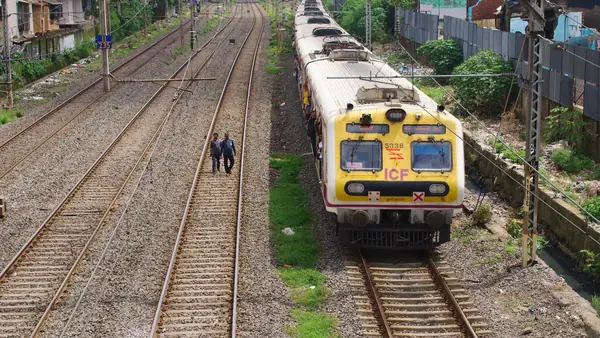
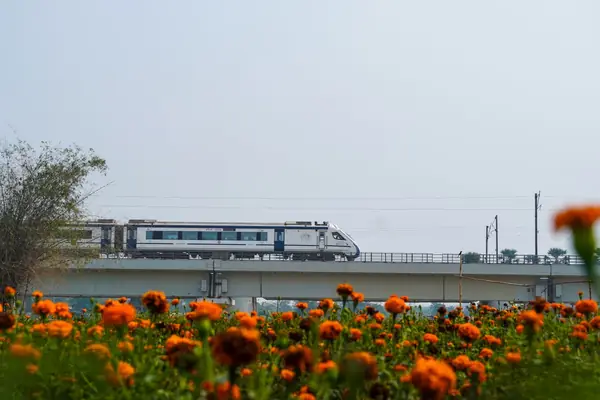
Photo: Harsh Khandelwal / Pexels
Electrification is one of those infrastructure statistics that sounds abstract until you notice its effect on your own journey: fewer stops for a locomotive change, and trains that can run faster and heavier than a diesel-hauled rake of the same size. Indian Railways has been pushing this conversion hard for over a decade, and the broad-gauge network is now very close to complete.
What percentage of the network is electrified today
Official figures from mid-2026 put broad-gauge electrification at over 99 percent, after a long, sustained push through the 2010s and 2020s, with only a few hundred route km left across a handful of states. Some zones, such as Southern Railway, have announced their own broad-gauge networks as fully electrified. New broad-gauge lines are built with electric traction from the start. Because official figures are updated periodically, check the Ministry of Railways or PIB for the latest precise numbers rather than relying on any single year's headline percentage.
Which major routes are still not fully electrified
On the broad-gauge network, the last unwired stretches are short sections spread over a few states that are being closed out. Beyond that, the routes outside this push are mostly ones that were never meant to be electrified in the conventional sense. India's UNESCO-listed mountain railways, including the narrow-gauge Darjeeling Himalayan Railway, the metre-gauge Nilgiri Mountain Railway and the narrow-gauge Kalka-Shimla line, run on diesel or steam traction as part of their heritage character rather than as an electrification gap to be closed. A number of low-traffic branch lines, industrial sidings and yard tracks also remain diesel-worked for shunting and local movements, where the cost of wiring doesn't match the volume of traffic.

| Category | Typical status |
|---|---|
| Broad-gauge main and branch lines | Nearly all electrified, a few short stretches left |
| Newly commissioned broad-gauge lines | Built electrified from the start |
| Heritage narrow- and metre-gauge hill railways | Diesel or steam by design |
| Some sidings and yard tracks | Diesel-worked for shunting |
Why does electrification matter for passenger travel
An electric locomotive, or a self-propelled electric train like the Vande Bharat, generally accelerates and sustains higher speeds more efficiently than an equivalent diesel rake, which matters directly for journey times on routes where speed restrictions aren't the limiting factor. It also removes a once-common source of delay: on routes that used to switch between electrified and non-electrified sections, trains needed a locomotive change at the boundary, adding a scheduled stop purely for that swap. With the broad-gauge network now almost entirely electrified, that particular delay has largely disappeared from long-distance journeys. Electrification has also been part of what makes newer, fully electric train sets like Vande Bharat and Amrit Bharat possible on a given route in the first place, since these designs depend on continuous electric traction rather than a diesel option.
Does electrification directly improve punctuality
It helps, but it isn't the whole story. Electrification raises the ceiling on how fast and how efficiently a train can run a given stretch of track, and it removes the loco-change delay described above, both genuine contributors to more consistent running times. But actual punctuality on any given day still depends on track capacity and congestion, signalling and interlocking, weather like fog in the winter months, and maintenance blocks, none of which electrification alone fixes. A fully electrified corridor that's also heavily congested with mixed passenger and freight traffic can still run late, so treat electrification as one input into punctuality rather than a guarantee of it.
Where is your train right now?
Live position, expected arrival at every stop and the delay history of the last few weeks.
What this means if you're comparing trains on a route
If you're weighing a newer electric train set against an older diesel-linked service on the same corridor, the electrified option is usually the faster one on paper, assuming both share the same track and signalling conditions. That said, a train's actual historical punctuality, visible on its own page, is a more reliable guide to what to expect than the traction type alone. Our trip planner lets you compare the trains serving your route with seat availability and confirmation chances, and each train's page shows its delay history, which captures this in practice rather than in theory.

A quick history of the push
Electrification in India goes back decades, starting with suburban sections around Mumbai and Kolkata long before it became a national priority, then expanding gradually along the busiest trunk routes through the 1980s and 1990s. The pace picked up sharply in the 2010s, when electrifying the remaining broad-gauge network became an explicit target rather than an ongoing background project, which is what brought the network to the nearly complete state it's in today. That shift in pace is also why a lot of the visible upgrades passengers now take for granted, faster timetables, fewer loco-change halts, more electric-only train sets, are relatively recent even though the underlying programme is old.
How this fits into the network's broader modernisation
Electrification has run alongside other upgrades, including the shift from older ICF coaches to LHB coaches built for higher speeds, the rollout of the Kavach automatic train protection system, and capacity additions through the dedicated freight corridors, which free up space on passenger lines by moving freight traffic off them. None of these upgrades alone explains a faster or more reliable train, but together they're the reason journey times on many routes have gradually come down over the past decade.
Use it on your trip
Frequently asked questions
What percentage of the network is electrified today?
Official mid-2026 figures put the broad-gauge network at over 99 percent electrified, with only a few hundred route km left and new lines built electrified from the start. Check the Ministry of Railways or PIB for the latest figures, since these are updated periodically.
Why does electrification matter for passenger travel?
Electric traction generally allows faster acceleration and higher sustained speeds, and it has removed the old locomotive-change delay at boundaries between electrified and non-electrified track, since the broad-gauge network is now almost entirely wired.
Which major routes are still not fully electrified?
No major trunk route: only short broad-gauge stretches in a few states remain to be wired. Outside that, heritage hill railways like the Darjeeling Himalayan Railway, Nilgiri Mountain Railway and Kalka-Shimla line run diesel or steam by design, plus some sidings and yard tracks used for shunting.
Does electrification directly improve punctuality?
It helps by raising possible speeds and removing loco-change delays, but punctuality still depends on track congestion, signalling, weather and maintenance, so an electrified route isn't automatically an on-time one.
Sources
Rules and fares change. Check the official source before you travel. Last reviewed 26 October 2026.