Darjeeling Toy Train Itinerary
How to plan the Darjeeling Himalayan Railway: the full NJP to Darjeeling route, the short joy ride, ticket booking and the best months for a clear Kanchenjunga view.
 TrainLiveStatus Desk · Updated · 6 min read
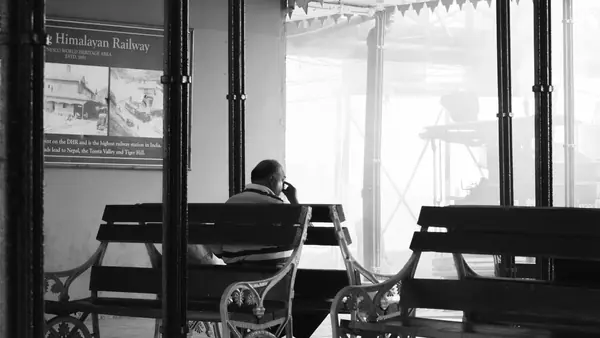
Photo: Shamba Datta / Pexels
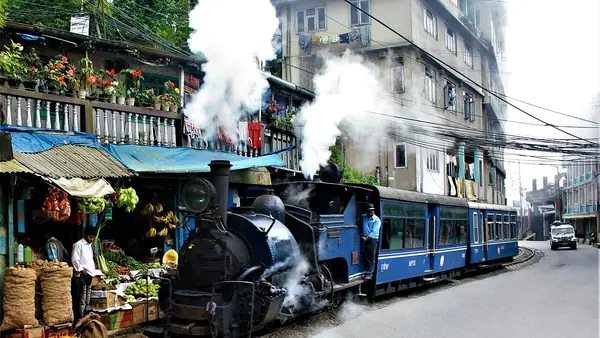
The Darjeeling Himalayan Railway (DHR) is the two-foot narrow-gauge line that has climbed from the plains into the hills since 1881. It is one of only a handful of railways in the world with UNESCO World Heritage status, and much of that reputation comes from its engineering: the loops and zigzag reverses on the climb below Kurseong, and the Batasia Loop just above Darjeeling. Here is how to actually plan a visit, not just admire the postcard.
The full route, station by station
The line starts at New Jalpaiguri (NJP), the same station where broad-gauge trains from Kolkata, Delhi and Guwahati arrive. From there it climbs through Sukna, Rangtong, Tindharia (home to the DHR's main workshop), Gayabari, Mahanadi and Kurseong, then on to Tung, Sonada and Ghum, the highest railway station in India at about 2,258 metres, before dropping slightly into Darjeeling (DJ) itself.

| Section | Distance | What you see |
|---|---|---|
| NJP to Kurseong | about 50 km | Tea gardens, the line running alongside and across the road (Hill Cart Road) repeatedly |
| Kurseong to Ghum | about 30 km | Tung and Sonada, pine forest, mist, up to the summit at Ghum |
| Ghum to Darjeeling | about 8 km | The Batasia Loop and war memorial, then the final descent into town |
Full route or just the joy ride
Very few travellers ride the entire NJP-to-Darjeeling section in one sitting. It is a long, slow day on a wooden bench with the diesel-hauled passenger service, and the most scenic part is only the last couple of hours. Two regular passenger trains cover the whole line: the NJP-DJ AC Passenger (52539) and the NJP-DJ Passenger (52541), both leaving NJP at 10:00 and taking roughly seven and a half (52541, daily) to eight and a half hours (52539, Monday, Wednesday and Saturday only) to reach Darjeeling.
What almost everyone actually books is the joy ride: a steam or diesel locomotive that runs from Darjeeling station down to Ghum and back, about two hours round trip including a stop at the Batasia Loop war memorial and another at Ghum's small railway museum. Steam joy rides cost more and are hauled by a genuine B-class steam locomotive from 1889 or later, still coal fired.

How long the joy ride actually takes
Book for a full morning even though the ride itself is about two hours. Steam locomotives on this gradient need time to build pressure and there is often a queue at the ticket window and the loco shed before departure. Afternoon departures run too, but morning light gives the best chance of a clear view of Kanchenjunga in the distance.
Booking
The NJP-Darjeeling passenger trains can be booked like any other Indian Railways train, through IRCTC. Joy ride tickets are a separate, smaller allotment sold directly by the DHR, mostly at the Darjeeling station counter, and joy rides can also be booked in advance online through IRCTC. Steam joy rides sell out first, especially on weekends and through the Puja and Christmas holiday weeks, so book as soon as your travel dates are fixed rather than assuming you can walk up.
Best season for clear views
October to December is generally the clearest window, with cool, dry air and long sightlines to Kanchenjunga. March to May is the second-best stretch, warmer and with rhododendrons in bloom, though afternoon haze builds up more often than in autumn. Avoid the June to September monsoon for both weather and the real chance of the line being suspended.
What each class of joy ride actually gets you
The Darjeeling to Ghum joy ride is sold in a few forms, and the difference is mostly the locomotive and the coach. The classic steam-hauled ride uses a vintage B-class engine, coal smoke and all, and is the one every DHR photo you've seen was taken from. A diesel-hauled version runs the same route for a lower fare when steam locomotives are under maintenance or fully booked. Both stop at the Batasia Loop, where the track spirals around a war memorial garden with, on a clear day, Kanchenjunga behind it, and again at Ghum station's small DHR museum before the return leg.
A simple two-day plan around it
If you're building a short Darjeeling trip around the railway rather than the other way round, this split works well for most people:
- Day 1: arrive by road or by the NJP passenger train, settle in, and use the afternoon for Chowrasta and the Mall Road area at low elevation-adjustment effort.
- Day 2 morning: an early Tiger Hill sunrise trip if the sky is clear, back for breakfast, then the steam joy ride late morning once the mist has usually lifted.
- Day 2 afternoon: the Himalayan Mountaineering Institute and zoo, next to each other on Birch Hill (Jawahar Parbat) on the north side of town and usually closed on Thursdays, or a tea garden visit at Happy Valley, about 3 km downhill from the town centre.
Travellers with a third day sometimes add the full NJP-to-Darjeeling passenger train as the arrival leg instead of a shared jeep, purely for the experience of the lower loops around Tindharia, which the joy ride doesn't reach.
What the joy ride does not cover
The single most repeated confusion is assuming the joy ride shows the whole railway. It only covers the top eight kilometres, Darjeeling to Ghum. The famous multiple loops and reversing stations lower down, between Kurseong and Tindharia, are only seen on the full NJP-Darjeeling passenger run or a private car following Hill Cart Road, which parallels the track for most of its length and lets you pull over wherever the train is visible.
Practical notes for the day
- Carry a jacket even in the plains-warm months; Ghum and the ridge above Darjeeling are noticeably colder than the town centre.
- Steam locomotives run on a published timetable but are more weather- and mechanically-sensitive than a diesel service, so build in slack rather than booking a tight onward connection right after the ride.
- Arrive at the platform in good time even with a ticket in hand; joy rides leave on schedule and the platform gets crowded.
Getting to NJP first
NJP is the gateway for the whole trip and is well connected from Kolkata, Delhi and Guwahati on the broad-gauge network. If you are coming from Kolkata, see our full Kolkata-to-Darjeeling itinerary for the overnight train and road transfer details. Check live running status for your NJP train and plan the connection with some slack: the toy train and joy ride both run on fixed daily schedules and don't wait for a late arrival. Our trip planner shows seat availability and realistic connection times if you are booking the onward toy train separately from the main line ticket.
Places in this guide
- Tiger Hillabout 5.2 km from Darjeeling in a straight line
- Happy Valley
- New Jalpaiguri station (NJP)railway station
- Darjeeling station (DJ)railway station
My plan
Order stops the way you will visit them with the arrows. Saved on this device only.
What will this trip cost you?
The grey numbers are rough placeholders, not quotes or prices we checked. Type your own figures; your entries stay on this device.
What to pack
Use it on your trip
Frequently asked questions
What's the full toy train route from NJP up to Darjeeling?
It runs from New Jalpaiguri through Sukna, Tindharia, Kurseong, Sonada and Ghum before reaching Darjeeling, a climb of roughly 2,000 metres over about 88 km.
How long does the joy ride portion typically take?
The Darjeeling-to-Ghum-and-back joy ride takes about two hours including stops at the Batasia Loop and Ghum's small railway museum.
Should I book the full route or just the short joy ride?
Most travellers only do the joy ride, since it covers the most scenic stretch in a fraction of the time. Book the full NJP-Darjeeling passenger train only if you specifically want the whole line and have a spare day.
What's the best season for clear mountain views?
October to December is usually clearest, with March to May a close second. The June to September monsoon brings poor visibility and a real risk of the line being closed after landslides.
Sources
- Darjeeling Himalayan Railway (Northeast Frontier Railway)
- UNESCO World Heritage: Mountain Railways of India
Rules and fares change. Check the official source before you travel. Last reviewed 2 October 2026.