Duronto Express Explained: India's Non-Stop Long Trains
What Duronto means, whether these trains really run non-stop today, and how they compare with Rajdhani, with real route examples like the YPR DEE Duronto.
 TrainLiveStatus Desk · Updated · 4 min read
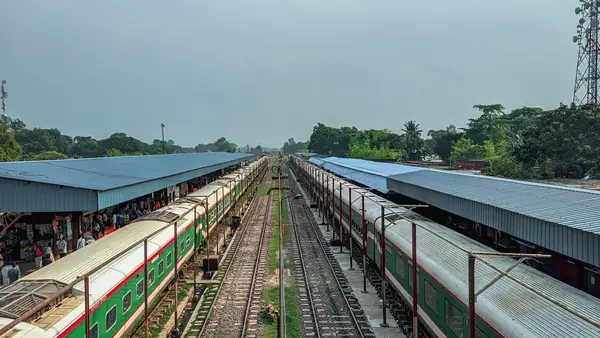
Photo: Nirjon Nakib / Pexels
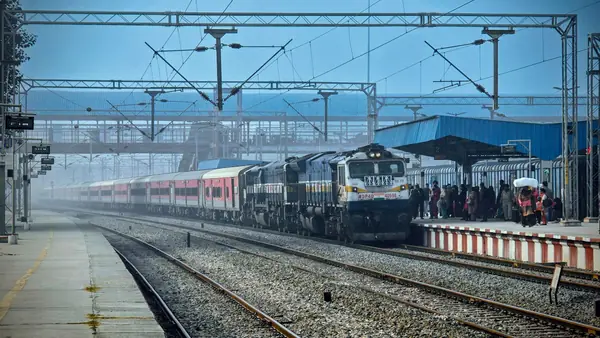
Duronto trains were built around one idea: cover a long distance point to point with as few stops as possible. The name itself, borrowed from Bengali, means restless or unstoppable, and the first Duronto set out to live up to it.
What "Duronto" actually means
Duronto comes from a Bengali word meaning restless, unstoppable or headstrong. Indian Railways launched the first service under this name in September 2009, running between Sealdah in Kolkata and New Delhi, marketed specifically as a point-to-point express with none of the usual intermediate commercial stops of a Rajdhani or a standard Mail/Express train.
Do Duronto trains really make zero stops?
Not any more, though that was the original design. At launch, a Duronto's only halts between origin and destination were technical ones, for a crew change, a locomotive change, or taking on water, and none of these allowed passengers to board or alight. From around 2016, Indian Railways has permitted some of these technical halts to become commercial stops as well, so on many routes today you can board or leave a Duronto partway through its run. Compared to a regular Mail/Express covering the same distance, though, a Duronto still stops far less often, which is the whole point of the class.
How Duronto compares with Rajdhani
Both are premium, long-distance, point-to-point services, but they solve for different things. Rajdhani trains are fully air-conditioned throughout and connect state capitals to Delhi. Duronto trains are built around minimising stops rather than maximising comfort tier: a Duronto's coach mix can include non-AC Sleeper and general coaches alongside AC classes depending on the route. On catering the two work the same way: meals are included in the fare by default, and you can opt out at booking to pay a lower fare. If your priority is the fastest possible point-to-point run with the fewest interruptions, a Duronto is usually the pick; if your priority is a fully air-conditioned overnight journey, a Rajdhani on the same corridor, where one exists, may suit you better.

| Duronto | Rajdhani | |
|---|---|---|
| Concept | Fewest possible stops | Premium all-AC point-to-point |
| Classes | Mix, varies by route | AC only |
| Catering | Included by default, opt-out at booking | Included by default, opt-out at booking |
| Connects | Major city pairs generally | State capitals to Delhi |
Popular Duronto routes
- YPR DEE Duronto (12213): a weekly run from Bengaluru (Yesvantpur) to Delhi Sarai Rohilla, one of the longer Duronto runs on the network, at about 32 hours.
- SC Duronto Express (12219): runs twice a week from Mumbai (LTT) to Secunderabad, a shorter but heavily used corridor.
- HWH SMVB Duronto Express (12245): connects Howrah in Kolkata with Bengaluru.
- CSMT Howrah Duronto (12261): links Mumbai CSMT with Howrah along one of the country's busiest east-west corridors.
Each of these has a return service running the reverse direction, generally on a different day of the week, so check your specific date and direction on the train's status page before booking.
Booking a Duronto
Durontos are booked through IRCTC exactly like any other reserved train, within the standard 60-day advance reservation window. Because the routes tend to be long-haul and heavily travelled corridors between major cities, popular Duronto services can book out weeks ahead in peak season, so it's worth checking seat availability and confirmation chances early through the trip planner rather than waiting until the last minute.
What a Duronto journey is actually like
Onboard, the experience depends heavily on which classes the specific train carries. On an all-AC Duronto, the ride is similar to a Rajdhani in comfort, with berths, bedding in AC classes, and meals served from the pantry car to passengers who did not opt out. On a Duronto with mixed Sleeper and AC coaches, expect the same variation in comfort you'd get on any long-distance express, just packed into fewer, longer non-stop stretches between halts. Toilets, charging points and coach attendants are standard across classes, but AC coaches naturally offer a quieter, more controlled environment for a long overnight leg.

Why fewer stops matter more than they sound
On a very long route, each intermediate halt adds not just the stop itself but deceleration and acceleration time either side of it, which adds up over a journey of 20 hours or more. A Duronto's reduced stop count can genuinely shave a meaningful chunk off total travel time compared with a regular express on the same route, even accounting for the commercial stops added since 2016. This is most noticeable on the longest Duronto corridors, where the time saved across dozens of skipped halts becomes a real, felt difference rather than a marginal one.
Is a Duronto worth choosing over a regular express?
If your priority is minimising total journey time on a long-distance route where both options exist, yes: fewer stops generally means a meaningfully shorter overall trip compared with a Mail/Express covering the same distance with its usual station-by-station halts. If you specifically need to board or alight at an intermediate town that a Duronto doesn't serve, even with the post-2016 relaxation on some routes, a regular express or a different train class may simply be the only option, so it's worth checking your exact boarding and destination stations on the specific train before assuming a Duronto works for your trip.
Where is your train right now?
Live position, expected arrival at every stop and the delay history of the last few weeks.
Use it on your trip
Frequently asked questions
What does 'Duronto' actually mean?
It comes from a Bengali word meaning restless, unstoppable or headstrong, chosen to reflect the train class's original point-to-point, minimal-stop design.
Do Duronto trains really make zero stops?
Not any more. The original design had only technical halts for crew or locomotive changes, but from around 2016 some of these have become commercial stops too, so most Durontos make a few stops today, still far fewer than a regular express.
How is Duronto different from Rajdhani?
Rajdhani trains are fully air-conditioned and connect state capitals to Delhi. Duronto trains focus on minimising stops, with a coach mix that varies by route and can include Sleeper class. Both include meals in the fare by default, with an opt-out at booking.
Which cities have the most popular Duronto routes?
Well-used corridors include Bengaluru (Yesvantpur) to Delhi, Mumbai to Secunderabad, Howrah to Bengaluru, and Mumbai to Howrah, each generally with a return service on a different weekly schedule.
Sources
Rules and fares change. Check the official source before you travel. Last reviewed 5 October 2026.