How Train Live Location Tracking Actually Works
Most Indian trains are tracked by station-passing data, not continuous GPS. Why the dot on the map can freeze for 20 minutes, and why apps sometimes disagree.
 TrainLiveStatus Desk · Updated · 4 min read
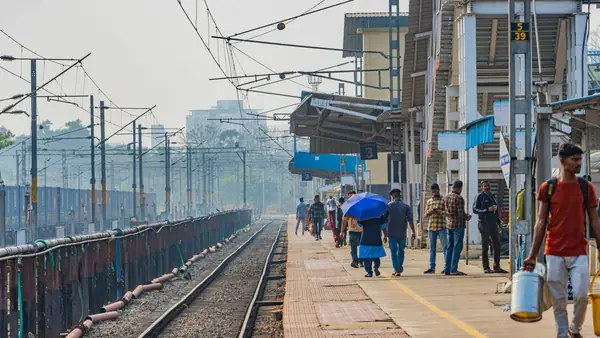
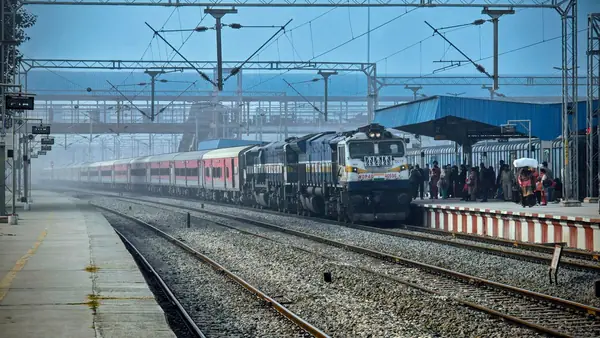
Photo: Porapak Apichodilok / Pexels


A moving dot on a map looks like GPS, so it's a reasonable assumption that every train is being tracked by satellite in real time. Mostly, that's not quite what's happening.
Do Indian trains have GPS trackers fitted
Increasingly, yes, but not universally. A system called RTIS (Real-Time Train Information System), developed by Indian Railways with ISRO, fits GPS-based devices to locomotives to push more frequent position updates than the older method allows. Coverage has been expanding steadily, but it isn't fitted to every single locomotive and rake running today, so a meaningful share of running status still relies on the older approach: recording when a train physically passes a station or a signalling point, not a continuous satellite feed.
Why live location sometimes freezes for 20 or more minutes
On a route without GPS coverage, the position only updates when the train crosses the next reporting point, which on some stretches, especially long rural block sections between stations, can genuinely be 20 minutes or more apart. The train hasn't stopped moving; the system simply has nothing new to report until the next crossing. Even on GPS-fitted trains, updates can lag briefly due to network coverage gaps in remote stretches, tunnels or hilly terrain.
Separately, a train can also be genuinely stationary, held at a signal or a loop line to let another train pass, which looks identical on the map to a reporting gap. The running status page usually shows the last confirmed station and the scheduled next one, which is the best way to judge whether a freeze is a data gap or an actual hold.

How different apps show slightly different positions for the same train
Every running-status provider, including ours, ultimately draws from the same underlying railway data, but providers differ in how often they refresh their own copy of it, how they interpolate a position between two confirmed points, and how quickly their systems process a new update once it's available. That's usually enough to produce a small, temporary difference between two apps checking the same train at the same moment. It generally resolves itself within a few minutes as both sources catch up to the next confirmed crossing.
Is the location based on the train itself or on station signalling data
For most of the network, it is based on signalling and control-office records: a station or a control point confirms a train has passed, and that confirmation is what moves the status forward. On the growing share of GPS-fitted locomotives, the position also draws from the train's own onboard device, which can update more frequently and doesn't strictly need a station crossing to report a new point. Over time, as RTIS coverage expands, more of the network should shift toward this more granular, train-based reporting.
What this means for how you use it
- Read the delay figure, not just the dot. A clear "running X minutes late" number is more informative than trying to judge distance from a static map position.
- Recheck rather than assume. If the position looks frozen, check again in ten to fifteen minutes rather than treating one snapshot as the full picture.
- Expect small cross-app differences. A minor mismatch between two tools checking the same train is normal, not a sign either one is wrong.
See it in action on any live running status page, which shows both the map position and the station-by-station list together. For a deeper look at reading delay figures specifically, see our guide to reading live running status.
Why this matters more than it seems
Understanding the difference between a genuine GPS feed and a station-passing record changes how you should read a delay. A train that hasn't reported in 25 minutes on a long rural stretch is not necessarily 25 minutes "behind"; it may simply not have crossed the next point yet on a section that normally takes that long. Compare the last confirmed time against the scheduled time for that same point, not against how long it's been since your last refresh, and the picture becomes a lot clearer and far less alarming.
This is also why a station board can sometimes look more useful than a map for planning a pickup: it shows the expected arrival time directly, worked out from the train's confirmed progress so far, rather than asking you to judge distance and speed from a dot's position yourself. Check the trip planner if a delay looks bad enough that a different train or connection might get you there faster, especially if you have a tight onward connection riding on it.
Use it on your trip
Frequently asked questions
Do Indian trains have GPS trackers fitted?
A growing number of locomotives carry GPS-based devices through a system called RTIS, but coverage isn't universal. A meaningful share of running status still relies on station-passing and signalling records rather than continuous GPS.
Why does live location sometimes freeze for 20+ minutes?
On routes without GPS coverage, position only updates when the train crosses the next reporting point, which can be a long stretch on some rural sections. The train is usually still moving; there's simply nothing new to report yet.
How do different apps show slightly different positions for the same train?
Providers refresh their data at different intervals and interpolate between confirmed points differently, which can produce small, temporary differences that resolve once both catch up to the next update.
Is the location based on the train or on signalling data from stations?
Mostly on signalling and station-passing records for now, with a growing share of GPS-fitted locomotives adding more frequent, train-based updates as that coverage expands.
Sources
Rules and fares change. Check the official source before you travel. Last reviewed 26 September 2026.