Understanding a Train's Punctuality Before You Book
How to read a train's typical delay pattern before booking, why punctuality shifts with season, and when a habitually late train is still worth booking.
 TrainLiveStatus Desk · Updated · 4 min read
Photo: Rudra Maity / Pexels
A printed timetable tells you when a train is scheduled to arrive. It says nothing about whether it actually does. Two trains with identical timetables on paper can have very different real-world punctuality, and the gap matters most exactly when it's least convenient to discover: a tight connection, a wedding you can't be late for, a flight booked for the same evening.
Where to actually check this
Every train's page on this site shows its recent running history alongside live status, so before you book, or right after, you can see how that specific train has actually been arriving over its recent runs, not just what the timetable promises. This is more useful than a general reputation ("that train is always late") because it shows a trend you can weigh against your own plans. If you're still choosing between two or three trains on the same route, our trip planner lets you compare them side by side rather than checking each one separately.
Does punctuality vary a lot by season?
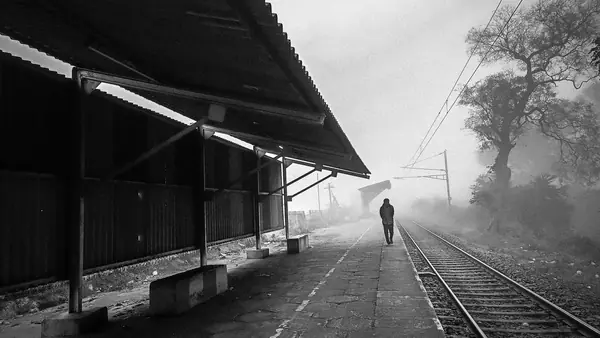
Yes, significantly, and this is the single biggest factor most people miss. Winter fog, roughly December through February on routes across North India, routinely pushes delays on trains through Delhi, Punjab, UP and Bihar well beyond their normal pattern, sometimes by several hours on the worst mornings. Monsoon months can add delays on routes prone to waterlogging or, on lines like the Konkan Railway, a deliberately slower timetable for safety. A train's typical delay pattern in October can look completely different from the same train's pattern in January, so check a recent window close to your actual travel month rather than an old average.

Where is your train right now?
Live position, expected arrival at every stop and the delay history of the last few weeks.
Should I avoid booking trains known for frequent delays?
Not automatically. A consistently late train can still be the right choice if it's the only direct option, if the delay doesn't affect your plans (an overnight train that's an hour late often just means a later, not worse, arrival), or if its fare and comfort outweigh the inconvenience. What a bad punctuality record should change is how you plan around it: a bigger buffer before a same-day connection, an evening arrival instead of assuming you'll make a tight morning meeting, or simply picking a different train if a better-timed alternative exists on the same route.
How reliable are on-time percentage figures?
Treat a single "on-time percentage" with some caution. It's a useful headline number, but it flattens a lot of variation, a train can be genuinely punctual nine months of the year and unreliable specifically in winter, and an annual average hides that. It's also sensitive to how "on time" is defined (some measures count anything under 15 minutes late as on time, others are stricter), so the trend and recent pattern shown on a train's own page tends to be more actionable than a single summary statistic.
What actually causes the delay in the first place
Punctuality isn't random. It usually traces back to a handful of recurring causes, single-line sections that get congested, freight priority at certain times of day, fog-related speed restrictions, or a late-running train further up the same route that pushes everything behind it back as well. Understanding the general causes, covered in more depth in our guide to why trains run late, helps make sense of why a train's delay pattern can shift suddenly, for example when a new line section opens or a temporary speed restriction is lifted.

A practical checklist before you book
- Check the specific train's recent delay pattern, not a general reputation for the route or the train type.
- Weigh the season. A train running through North India in January carries more winter-fog risk than the same route in April.
- Match the buffer to the stakes. A flexible holiday plan can absorb a delay a wedding or flight connection cannot.
- Re-check the day before travel. A recent run of bad delays close to your date is a stronger signal than a pattern from weeks earlier.
Once you've booked
Booking based on a good punctuality pattern doesn't remove the need to check on the day. Our live running status pages show exactly where your train is and how it's running right now, and if a delay does show up, the trip planner can help you weigh alternatives on the same route if your connection is genuinely at risk. Reading the pattern beforehand and checking the live picture on the day work together, one sets expectations, the other confirms them, and neither replaces the other.
What to pack
Use it on your trip
Frequently asked questions
Where can I check a train's typical delay pattern?
Each train's own page on this site shows its recent running history alongside live status, which gives a better picture than the timetable alone or a general reputation.
Does punctuality vary a lot by season?
Yes. Winter fog on North Indian routes and monsoon-related slowdowns on some lines can push delays well above a train's typical pattern for other months, so check a recent window close to your travel date.
Should I avoid booking trains known for frequent delays?
Not automatically. A late-running train can still be the right choice depending on your plans; what matters is building an appropriate buffer, especially around same-day connections, rather than avoiding the train outright.
How reliable are on-time percentage figures?
Useful as a headline but worth treating with some caution, since a single annual figure can hide big seasonal swings and depends on how "on time" is defined. A recent trend is more actionable than one summary number.
Sources
Rules and fares change. Check the official source before you travel. Last reviewed 30 September 2026.