Mumbai to Howrah trains: largest delays, 5 to 11 November 2026
How late the five Mumbai CSMT to Howrah trains ran in our tracking from 5 to 11 November 2026, ranked by average largest daily delay, with the method behind it.
 TrainLiveStatus Desk · Updated · 3 min read

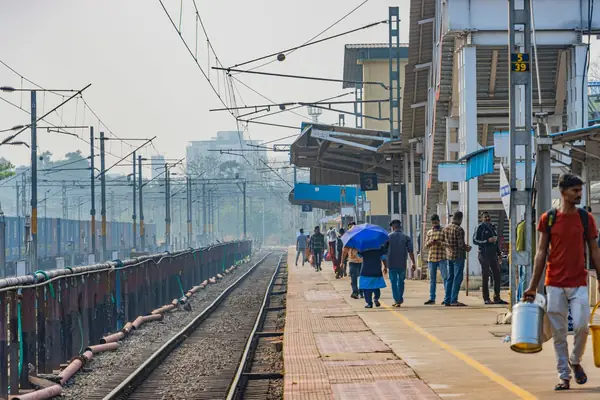
Photo: Prasanjeet Shyam / Pexels
What we measured and how
This report covers five regular trains on the Mumbai CSMT to Howrah Junction corridor, as recorded in our own delay tracking for the seven days from 5 to 11 November 2026. For each train we record the largest delay reported during that day's run. A train counts as on time when that largest delay is within 15 minutes.
Today, 11 November, is the last day in the window, so that day may be only partly recorded. These figures come from TrainLiveStatus's own tracking. They are not an official Indian Railways statistic. Our data does not record why a train was late, so this report does not give causes.
The five trains, ranked
The trains are ranked below by their average largest daily delay, longest first.
| # | Train | Route | Days observed | Average largest delay | Worst day | On time |
|---|---|---|---|---|---|---|
| 1 | 12261 Howrah Duronto | C Shivaji Maharaj Terminus to Howrah Jn | 7 | 7 h 21 min | 11 h 59 min | 0 of 7 |
| 2 | 12809 Howrah Mail | C Shivaji Maharaj Terminus to Howrah Jn | 7 | 3 h 32 min | 4 h 50 min | 0 of 7 |
| 3 | 12859 Gitanjali Express | C Shivaji Maharaj Terminus to Howrah Jn | 6 | 2 h 43 min | 4 h 00 min | 0 of 6 |
| 4 | 12869 CSMT Howrah Express | C Shivaji Maharaj Terminus to Howrah Jn | 3 | 2 h 31 min | 3 h 33 min | 0 of 3 |
| 5 | 12322 Kolkata Mail | C Shivaji Maharaj Terminus to Howrah Jn | 7 | 2 h 08 min | 3 h 04 min | 0 of 7 |

Across all five trains the average largest daily delay was 3 hours 39 minutes. None of the five was on time on any observed day in the window.
Reading the table
The Howrah Duronto is the outlier. Its average is more than double that of the next train, and its worst day in the window reached about 12 hours. The other four trains are closer together, between about two and three and a half hours on average.
Days observed matters here. The Duronto and the CSMT Howrah Express have their timetable running days listed differently from the number of days we recorded them. For example, the Duronto is listed in our timetable as running on four days a week, yet our tracker recorded it on all seven. We have not yet found the reason, so use the day counts as what our tracker recorded, not as a count of scheduled runs.
What to do if you travel on this corridor
- Leave a margin at Howrah. If you have a connection in Kolkata, plan for the average delay on your train, not the time in the timetable.
- Check the live status before you leave home. Each train page shows the running status for the current day.
- Compare alternatives. The trip planner shows other trains on the same corridor, with seat availability and connections, so you can choose the option that fits your time.
Related reports
For the earlier Mumbai to Howrah report, see Mumbai to Howrah trains: largest delays, 7 to 13 October. For the national picture, see the most delayed trains from 29 October to 4 November.
Where is your train right now?
Live position, expected arrival at every stop and the delay history of the last few weeks.
Use it on your trip
Frequently asked questions
How is each train ranked in this report?
Each train is ranked by its average largest daily delay across the days we observed it in the window. The longest average is at the top, and the worst single day is shown next to it.
Is this an official Indian Railways figure?
No. The numbers come from TrainLiveStatus's own tracking. They are not an official statistic, and our data does not record the reason for any delay.
Why do two trains have fewer or different days in the sample?
Our tracker records a train on the days it has a report for, and the number of days recorded does not always match the timetable's running days. The table shows the count so you can judge each figure.
Should I plan my trip around the average delay?
Use the average as a guide to what usually happens, then check the live status for your date. For a fixed appointment, leave a wide margin, and keep a backup train in the trip planner in case your first choice runs late.
Sources
Rules and fares change. Check the official source before you travel. Last reviewed 11 November 2026.