Semi-High-Speed Trains in India Explained
What semi-high-speed means in Indian Railways terms, which trains qualify, and why they can't simply run faster on the existing track network.
 TrainLiveStatus Desk · Updated · 4 min read
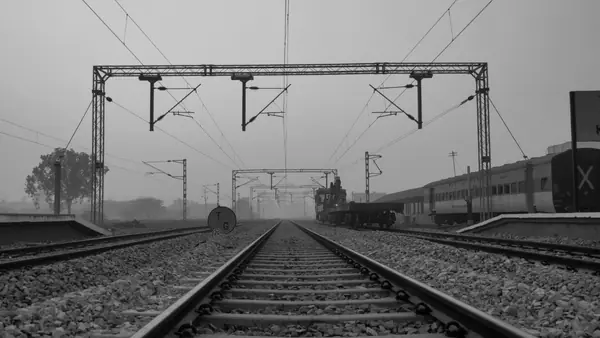
Photo: Sukhpal Gharu / Pexels
Semi-high-speed comes up constantly in railway news, usually attached to Vande Bharat, but the term itself rarely gets defined properly. It sits in a specific gap: faster than India's traditional mail and express trains, well short of the bullet-train speeds you see in Japan or Europe.
What speed range counts as semi-high-speed
In Indian Railways usage, semi-high-speed generally refers to trains designed to run at 160 km/h and above, up to about 200 km/h, on suitable track, though many currently operate lower than their design speed because the track itself doesn't yet support it everywhere. True high-speed rail, the bullet train category, starts around 250 km/h and typically runs 300-320 km/h on dedicated corridors built for nothing else.
So semi-high-speed is best understood as a design capability rather than a guaranteed running speed. A train built to do 160 km/h might average well under that on a given route, depending on curves, other traffic and signalling along the way.
| Category | Typical speed | Example |
|---|---|---|
| Conventional Mail/Express | Up to 110-130 km/h | Most long-distance trains |
| Semi-high-speed | 160-200 km/h | Vande Bharat, Gatimaan Express |
| True high-speed (bullet train) | 250-320 km/h | Mumbai-Ahmedabad corridor, under construction |
Which trains currently qualify
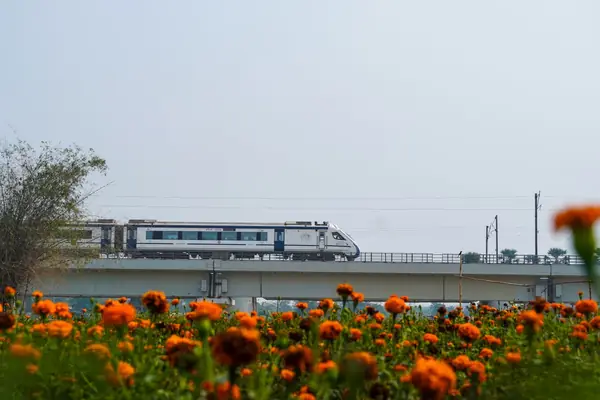
The Vande Bharat Express is the name most associated with this category today, designed for speeds up to 180 km/h though most routes currently run it lower due to track conditions. The Gatimaan Express, which now runs between Hazrat Nizamuddin and Virangana Lakshmibai (Jhansi) via Agra, was India's first train formally branded as semi-high-speed when it launched, certified for 160 km/h on that particular stretch. The Shatabdi Express and Tejas Express are also grouped in the same fast-but-not-bullet-train conversation, though most of their routes are certified a little below this 160 km/h-plus bracket rather than solidly inside it.

None of these are uniformly fast for their entire journey. A Vande Bharat run typically hits its higher speeds on straighter, well-maintained stretches and slows considerably approaching busier junctions, level crossings or curved sections, the same way any train does, just with a higher ceiling when conditions allow it.
Why these trains can't just run faster on existing track
Raising a train's rated top speed doesn't automatically raise its real average speed, because most of India's rail network was built and aligned for slower, mixed traffic decades ago. A few structural limits matter most:
- Track geometry. Curves and gradients designed for 110-130 km/h running can't simply be run faster without expensive realignment or speed restrictions through those sections.
- Signalling. Running safely at higher speed needs shorter, more reliable braking distances and better collision-avoidance systems, which is part of why the Kavach rollout matters for any push toward faster running.
- Mixed traffic. Indian Railways runs freight, slower passenger trains and fast trains on largely the same tracks. A fast train still has to slow for junctions, crossings and sections shared with much slower traffic.
- Level crossings. Manned level crossings still dot many routes (unmanned ones on broad gauge were eliminated in 2019), and they force speed caps regardless of what the train itself is capable of.
This is also why India's approach to true high-speed rail is a dedicated corridor rather than upgrading existing lines. The Mumbai-Ahmedabad project uses its own alignment, built specifically for speeds well beyond what any semi-high-speed train achieves on shared track. You can read where that project currently stands in our Mumbai-Ahmedabad bullet train status guide.
Where is your train right now?
Live position, expected arrival at every stop and the delay history of the last few weeks.
How semi-high-speed differs from true bullet-train speed in practice
Beyond the raw number, the two categories differ in what they're built on. Semi-high-speed trains like Vande Bharat run on the existing, shared broad-gauge network, sharing tracks, signals and junctions with every other train in the system. That's exactly what makes them practical to roll out quickly across many routes. True high-speed rail needs a dedicated, grade-separated corridor with no level crossings and no mixed traffic, which is a much larger and slower infrastructure project.
In effect, semi-high-speed is India's way of getting a meaningful speed and comfort upgrade onto the network that already exists, while true high-speed rail is a separate, purpose-built system layered on top for specific corridors over the longer term.

Why this matters for planning a trip
For a passenger, the practical upshot is that a semi-high-speed train's real advantage over a conventional express isn't just the top speed, it's fewer stops, tighter scheduling and generally better on-time performance since these trains are prioritised on the network. The time saved over a full journey usually comes from cutting dwell time at stations and reducing scheduled halts, not from constant high-speed running throughout.
That's also why two semi-high-speed trains on paper-similar routes can have noticeably different journey times: one might run mostly on well-upgraded, straighter track with fewer level crossings, while another spends more of its route on older alignment shared with slower traffic. Checking a specific train's actual timing and punctuality history before booking tells you more than its category name does. For a full comparison of how Vande Bharat stacks up against Rajdhani and Shatabdi on comfort and timing, see our Rajdhani vs Shatabdi vs Vande Bharat guide, and for how it compares with the newer Amrit Bharat trains, our Amrit Bharat vs Vande Bharat comparison covers the differences in fare, class and speed positioning.
If you're simply trying to find the fastest option for a specific route today, our fastest trains in India roundup lists current journey times across the network rather than design speeds on paper.
Use it on your trip
Frequently asked questions
What speed range counts as 'semi-high-speed'?
Roughly 160 to 200 km/h on Indian Railways' existing broad-gauge network, faster than conventional Mail/Express trains but below the 250 km/h-plus threshold of true high-speed rail.
Which trains currently qualify as semi-high-speed?
Vande Bharat Express is the main one, designed for up to 180 km/h. Gatimaan Express, certified for 160 km/h on its Delhi-Agra stretch, was the first train branded this way. Shatabdi and Tejas are usually mentioned alongside them, though most of their routes run a little below this bracket.
Why can't these trains run faster on existing tracks?
Track geometry built for slower speeds, mixed traffic sharing the same lines as freight and slower trains, level crossings, and signalling limits all cap real-world speed regardless of what the train itself can do.
How does semi-high-speed differ from true bullet-train speed?
Semi-high-speed trains run on the existing shared network, which is what makes them quick to roll out across many routes. True high-speed rail needs its own dedicated, grade-separated corridor with no level crossings, a much larger infrastructure project.
Sources
Rules and fares change. Check the official source before you travel. Last reviewed 7 October 2026.