Superfast vs Mail Express vs Passenger Train: The Difference
What officially separates a superfast train from a mail express and a passenger train, why superfast tickets cost more, and how to tell them apart by number.
 TrainLiveStatus Desk · Updated · 4 min read
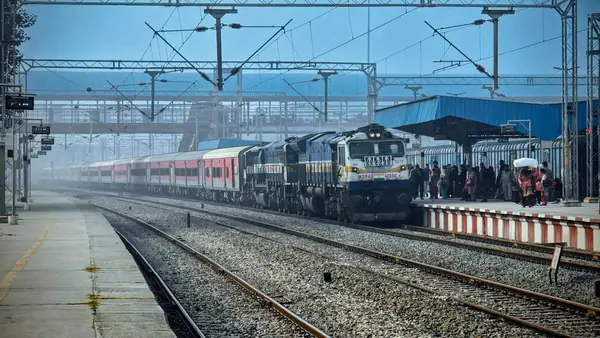
Photo: Mahmut Yılmaz / Pexels
"Why is this train called express but stops everywhere" and "why did I pay extra for a superfast ticket" are two versions of the same confusion. Indian Railways sorts trains into categories mainly by scheduled average speed and stopping pattern, and the names on the reservation chart map onto real, checkable differences rather than just marketing.
What officially makes a train "superfast"
A train earns the superfast classification when its scheduled average speed, calculated over the whole run including halts, is above a minimum threshold set by Indian Railways. At the time of writing this threshold sits at 55 km/h for most broad-gauge routes, though the exact figure and how it's applied has been adjusted over the years, so treat it as the general idea rather than a number to quote precisely. Trains meeting this bar carry the superfast surcharge on top of the base fare, regardless of what the train is actually named, plenty of trains with "Express" in the name are officially superfast, and a few named "superfast" barely clear the threshold.
Mail and express: the middle tier
Mail and express trains are the broad middle category, historically the workhorses that connect major and mid-sized towns with more stops than a superfast service but fewer than a passenger train. "Mail" is largely a historical label from when these trains also carried postal cargo, and today it doesn't functionally distinguish a train from an ordinary express in terms of speed or stops, both fall into the same practical tier. These trains typically carry reserved coaches (sleeper, AC classes) alongside general unreserved coaches.

Passenger trains: the local, unreserved tier
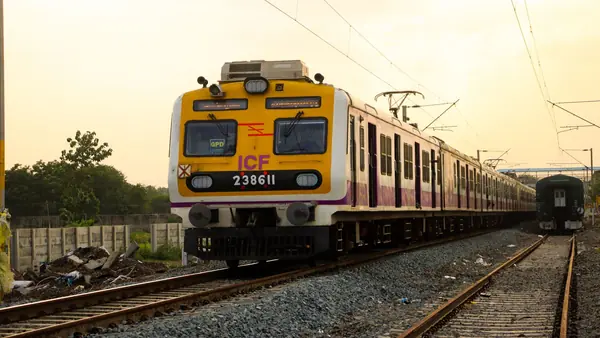
Passenger trains, sometimes running as DEMU or MEMU services on electrified short routes, stop at nearly every station along their route, including small halts that superfast and express trains run straight past. They're unreserved, meaning there's no seat allocation, you board and find a seat, and fares are the cheapest of any category by a wide margin. Journey times are correspondingly long for the distance covered.
| Category | Typical stops | Reserved seating | Relative fare |
|---|---|---|---|
| Rajdhani / Shatabdi / Vande Bharat | Very few | Fully reserved | Highest |
| Superfast mail/express | Moderate | Reserved classes + general | Higher, surcharge applies |
| Ordinary mail/express | More frequent | Reserved classes + general | Standard |
| Passenger / DEMU / MEMU | Nearly every station | Unreserved only | Lowest |
Why superfast tickets cost more
The superfast surcharge is a fixed supplementary charge for the faster schedule, and in practice these trains also get priority over slower trains at junctions and crossings to keep that schedule. You're paying for the time saved, not just a label. On a short route the surcharge can feel like it doesn't buy much, since a superfast train might only save twenty or thirty minutes over an ordinary express, but on a long overnight run the difference in total journey time is often several hours.
Does a passenger train stop at every single station
Close to it, though not literally every one. Passenger and MEMU/DEMU services are built around dense local stopping patterns, serving small stations and halts that don't get any express or superfast service at all, which is exactly their purpose, they're the backbone of local and short-distance travel in a region rather than a way to cover long distances quickly. If you're travelling a short hop between two nearby towns, a passenger train is often perfectly practical; for anything over a couple of hours, the accumulated stop time makes it a poor choice compared to an express.

How to spot the category from the train number
Train numbering gives useful hints, though it isn't a strict rulebook. Passenger services commonly carry five-digit numbers starting with 5, while MEMU and DEMU services usually start with 6 or 7. Examples include the Umb-Klk Passenger (54531) or the Hw-Rksh Passenger (54481). Mail, express and superfast trains generally use numbers in other ranges, and premium named trains like Rajdhani, Shatabdi, Duronto and Vande Bharat mostly use the same superfast-style numbers starting with 1 or 2 (for example 12xxx, 20xxx or 22xxx), so the name tells you more than the number there. This is a helpful quick check, but the definitive answer for any specific train is always the category shown on its own timetable and fare page rather than the number pattern alone.
Choosing between them for your own trip
If minimising total travel time matters most, look at scheduled duration directly on the trip planner rather than relying on the category name, since two "express" trains on the same route can have meaningfully different schedules. If you're making a short local trip and don't need a reserved seat, a passenger or MEMU service is often the cheapest and most flexible option, you can usually just show up and board rather than booking in advance. Check any specific train's live running status before you leave for the station either way, since passenger trains in particular can run behind schedule at busy junctions where they yield priority to faster classified trains.
Where is your train right now?
Live position, expected arrival at every stop and the delay history of the last few weeks.
Use it on your trip
Frequently asked questions
What officially qualifies a train as 'superfast'?
A scheduled average speed above a minimum threshold set by Indian Railways, which sits around 55 km/h for most broad-gauge routes at the time of writing. Trains meeting it carry a superfast surcharge regardless of their name.
Why do superfast tickets cost more?
It is a fixed supplementary charge for the faster schedule. Superfast trains also get priority over slower trains on the network, and the time saved is most noticeable on long routes.
What's the actual speed difference between these categories?
Premium trains like Rajdhani and Vande Bharat post the highest averages, superfast mail/express trains come next, ordinary mail/express trains are slower again, and passenger or DEMU/MEMU services, stopping almost everywhere, are the slowest of all.
Does a passenger train stop at every single station?
Close to it. Passenger and DEMU/MEMU trains serve nearly every station and halt on their route, including small stops that no express or superfast train serves, which is exactly their purpose for short local journeys.
Sources
Rules and fares change. Check the official source before you travel. Last reviewed 1 October 2026.