Things to Do in Gaya After You Get Off the Train
Gaya station to Bodh Gaya's Mahabodhi Temple is about 13-16 km, Vishnupad Temple is in town, Barabar Caves a longer trip. Real distances and timing.
 TrainLiveStatus Desk · Updated · 4 min read
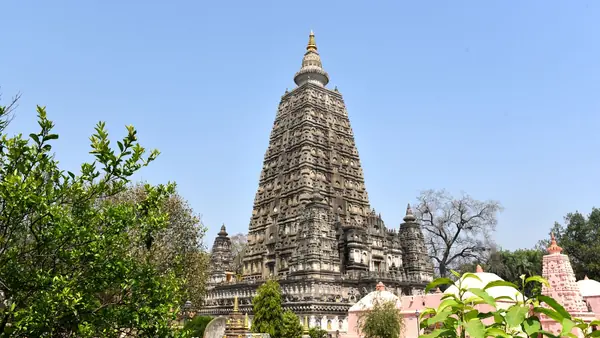
Photo: Nancy Yu / Pexels
Gaya station serves two pilgrimages that most visitors don't realise are separate places until they arrive. Vishnupad Temple, dedicated to Vishnu and central to Hindu ancestor-worship rituals (pind daan), sits in Gaya town itself, close to the Gaya Jn (GAYA) station. The Mahabodhi Temple in Bodh Gaya, where the Buddha is believed to have attained enlightenment under the Bodhi tree, is a separate town about 13-16 km away depending on the road taken.

Vishnupad Temple: close to the station
Vishnupad Temple, on the banks of the Falgu river, is about 3 km from the station and a straightforward auto ride. It is one of the most significant sites in India for performing pind daan and shraddha rituals for deceased ancestors, and the temple complex and ghats around it can get busy, particularly during the Pitru Paksha period in the Hindu calendar, when Gaya draws large numbers of pilgrims specifically for these rites.
| Place | Distance from GAYA | Time needed | Map |
|---|---|---|---|
| Vishnupad Temple | About 3 km | 1 to 1.5 h | Map |
| Mahabodhi Temple, Bodh Gaya | About 13-16 km | 2.5 to 3.5 h including travel | |
| Barabar Caves | About 35 km | 3 to 4 h round trip | Map |
Places in this guide
- Vishnupad Templeabout 16 km from Gaya in a straight line
- Barabar Cavesabout 29 km from Gaya in a straight line
- Gaya Junction station (GAYA)railway station
My plan
Order stops the way you will visit them with the arrows. Saved on this device only.
Bodh Gaya: the Mahabodhi Temple
The Mahabodhi Temple complex, a UNESCO World Heritage Site, centres on the descendant of the original Bodhi tree and the Vajrasana, the spot traditionally held to be where the Buddha sat during enlightenment. Around the main temple, Bodh Gaya's international monasteries, built by Thai, Japanese, Tibetan, Bhutanese and other Buddhist communities, are each worth a stop if you have time, since their architectural styles differ noticeably from each other and from the main temple itself.
The complex is calmest in the early morning and around sunset, and busiest around midday with tour groups. Modest dress and quiet, respectful behaviour are expected throughout, as it remains an active site of worship and meditation, not only a monument.
Barabar Caves: for a fuller day
The Barabar Caves, about 35 km from Gaya, are the oldest surviving rock-cut caves in India, dating to the Mauryan period, carved with the distinctive polished interior surfaces that give them their unusual acoustics. They see far fewer visitors than Bodh Gaya and need a dedicated half day given the distance and the more limited road infrastructure getting there, so this is better planned as its own outing rather than combined with Bodh Gaya on the same day.

When to go
October to March brings the most comfortable weather for both temple visits and the walking involved at Barabar Caves. The Pitru Paksha period (usually September) sees Vishnupad Temple and the surrounding ghats extremely busy with ritual pilgrims, which is worth knowing if your visit is for general sightseeing rather than performing rites yourself, since accommodation and transport get stretched thin in Gaya town during this window.
A single day or an overnight?
Vishnupad Temple plus the Mahabodhi Temple in Bodh Gaya can realistically be covered in one full day from Gaya if you start early, though an overnight stay in Bodh Gaya gives you the calmer early-morning and evening hours at the main temple, generally considered the best time to be there. If Barabar Caves are on your list as well, that pushes the trip to at least two days.
Where to stay and eat
Bodh Gaya has a far wider and more comfortable range of accommodation than Gaya town itself, since it caters to a steady flow of international Buddhist visitors, including guesthouses attached to some of the monasteries. If you're spending a night, basing yourself in Bodh Gaya rather than Gaya town generally makes for a calmer stay. For food, Gaya town leans toward standard Bihari and North Indian fare, while Bodh Gaya has a noticeably wider spread including Tibetan and other Asian cuisines around the monastery area, reflecting its more international visitor base.
Getting around
Autos and cycle rickshaws cover the short Vishnupad Temple hop easily from the station. For Bodh Gaya, a shared or private auto is the usual choice for the 13-16 km run, and most drivers around the station are used to the route and can suggest a fair fixed fare rather than needing negotiation from scratch. For Barabar Caves, a taxi arranged in advance is more reliable than trying to find return transport at the site itself.
Getting to Gaya by train
Gaya Jn is a major junction on the Grand Chord section of the Delhi-Howrah route, with direct trains from Delhi, Kolkata, Patna, Varanasi and other cities across the Gangetic plain. Use our trip planner to check trains into Gaya from your city, and check live running status before heading to the station, since Gaya sits on a busy trunk route where schedules can shift, especially in winter fog season.

What will Gaya cost you?
The grey numbers are rough placeholders, not quotes or prices we checked. Type your own figures; your entries stay on this device.
What to pack for Gaya
Use it on your trip
Frequently asked questions
How far are the main attractions from Gaya railway station?
Vishnupad Temple is close, about 3 km. The Mahabodhi Temple in Bodh Gaya is about 13-16 km depending on the route, and Barabar Caves are further out at around 35 km.
What is the best time of year to visit Gaya?
October to March is the most comfortable for sightseeing. The Pitru Paksha period, usually in September, brings very large crowds of ritual pilgrims to Vishnupad Temple specifically.
Can Gaya's highlights be covered in a single day from the station?
Vishnupad Temple and the Mahabodhi Temple can be covered in one full day starting early. Barabar Caves need their own half day, so adding them pushes the trip to two days.
Is prepaid auto or taxi available right outside Gaya station?
Yes, autos and taxis operate outside the station for both the short Vishnupad Temple trip and the longer run to Bodh Gaya. For Bodh Gaya, arranging return transport with waiting time is more practical than a one-way fare.
Which trains connect most easily to Gaya?
Gaya Jn sits on the Grand Chord section of the Delhi-Howrah route and has direct trains from Delhi, Kolkata, Patna, Varanasi and other major cities across the Gangetic plain.
Sources
Rules and fares change. Check the official source before you travel. Last reviewed 2 October 2026.