Things to Do in Shillong After You Get Off the Train
Shillong has no station of its own. Here is the real distance from Guwahati, how to get there, and what to see, with realistic timing for each stop.
 TrainLiveStatus Desk · Updated · 5 min read
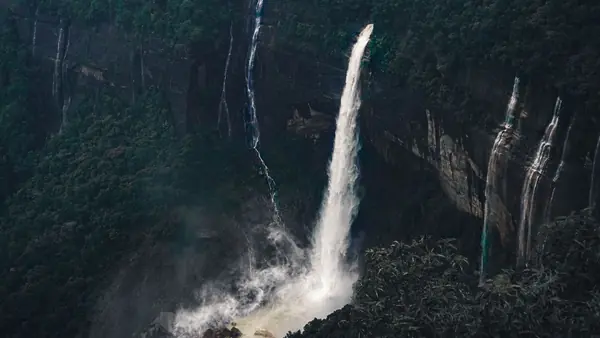
Shillong has no railway station of its own. Every train traveller arrives through Guwahati (GHY), the main rail gateway to the whole North East, and covers the last stretch to Shillong by road. That road leg is longer than most people expect, so it is worth planning the transfer properly before you book your train.

Getting from Guwahati station to Shillong
Shillong is roughly 100 to 105 km from Guwahati railway station, a drive of about 3 to 3.5 hours on the NH6, longer if you hit traffic near Guwahati city or road work in the hills. There is no train link for this last leg; you continue by shared Sumo (shared taxi), a private cab, or a state transport bus.
Which trains connect most easily to Shillong
Guwahati is served by direct trains from Delhi, Kolkata, Bengaluru, Chennai and most major North East routes, so almost any onward North East itinerary passes through it. Overnight trains from Kolkata, such as the Saraighat Express, land you in Guwahati in the morning, leaving a full day for the drive up. From Delhi, the Rajdhanis reach Guwahati in the evening, so plan a night in Guwahati, while trains like the Poorvottar Sampark Kranti arrive in the morning.
What to do once you're in Shillong
| Spot | Distance from Shillong town | Best for | Map |
|---|---|---|---|
| Ward's Lake and Lady Hydari Park | Walking distance from the centre | An easy first evening stroll | Map |
| Elephant Falls | About 12 km | A short half-day trip, especially after rain | Map |
| Shillong Peak | About 10 km | City and valley views, best on a clear morning | Map |
| Mawlynnong and the living root bridges | About 90 km, roughly 3 hours | A full-day trip, best started early | Map |
| Cherrapunji (Sohra) | About 55 km, roughly 2 hours | A full day for waterfalls and the Nohkalikai Falls viewpoint | Map |
Places in this guide
- Ward's Lakeabout 1.1 km from Shillong in a straight line
- Elephant Fallsabout 8.8 km from Shillong in a straight line
- Cherrapunjiabout 37 km from Shillong in a straight line
- Nohkalikai Fallsabout 40 km from Shillong in a straight line
- Lady Hydari Park
- Shillong Peak
- Mawlynnong and the living root bridges
- Guwahati station (GHY)railway station
My plan
Order stops the way you will visit them with the arrows. Saved on this device only.
Can Shillong's highlights be covered in a single day from the station
Not comfortably. The drive from Guwahati alone takes 3 to 3.5 hours each way, which leaves little time for sightseeing if you try Shillong as a same-day round trip from the station. A realistic plan is to treat Guwahati as the arrival and departure point and spend at least one night, ideally two, in or around Shillong itself, using it as a base for Cherrapunji and Mawlynnong. Use the trip planner to check seat availability into Guwahati before fixing your dates.
Best time of year to visit
October to May is the more reliable window, with clear skies and easier road conditions, and autumn (October, November) is especially good for cool weather without heavy rain. June to September is the monsoon, the wettest stretch in India, which fills the waterfalls dramatically but also brings the highest landslide risk on hill roads. Winter (December, January) is cold at night and worth packing warm layers for.
A realistic two-day plan
Day 1: Guwahati to Shillong
Arrive at Guwahati by train in the morning, have breakfast near the station, and take a shared Sumo or pre-booked cab to Shillong. Settle in by early afternoon, then use the rest of the day for Ward's Lake, the local market at Police Bazar, and a sunset stop at Shillong Peak if the sky is clear.

Day 2: Cherrapunji or Mawlynnong, then back to Guwahati
Start early for either Cherrapunji, with its waterfalls and living root bridge access points, or the farther Mawlynnong, often called the cleanest village in Asia, and its canopy walk. Head back towards Guwahati by late afternoon to leave a buffer before an evening or overnight train.
Is prepaid auto or taxi available right outside the station
Guwahati station has a prepaid taxi counter for city rides and short hops, useful for reaching Paltan Bazar or a hotel in Guwahati itself. For the longer run to Shillong, it is usually cheaper and easier to book a shared Sumo at the dedicated stands or arrange a private cab in advance, rather than negotiating a long-distance fare at the prepaid counter.
Practical notes for the return leg
- Leave a real buffer before your train. A 3 to 3.5 hour drive can stretch well past 4 hours with traffic near Guwahati or hill-road delays, so don't book a same-day connecting train that leaves less than a 5 to 6 hour gap.
- Check your train's live running status before leaving Shillong; if it is delayed you can slow down the return drive and skip rushing through the last stretch of hill road.
- Carry an ID and permit documents at all times. Meghalaya does not require an Inner Line Permit for Indian tourists, but if your onward plans include states that do, such as Arunachal Pradesh or Nagaland, arrange the permit in advance.
Food to try in Shillong
Shillong's food scene reflects Meghalaya's Khasi, Jaintia and Garo influences alongside a strong cafe culture built up over the last decade. Jadoh, rice cooked with pork, and dohkhlieh, a spiced pork salad, are worth seeking out at local eateries around Police Bazar rather than the more tourist-facing restaurants. Shillong is also known for genuinely good coffee shops, a legacy of its hill-station colonial history, and a bakery culture that stands out compared to most North East towns.
Getting around Shillong itself
Once you're in Shillong, local shared taxis cover fixed routes around town cheaply, while a private taxi hire is more practical for reaching Elephant Falls or Shillong Peak on your own schedule. The town centre is compact enough to walk between Ward's Lake, Police Bazar and nearby cafes, but the hillier residential areas and outlying viewpoints are better done by vehicle. Traffic in central Shillong can be surprisingly heavy for a hill town, so build a little extra time into any short local trip.

A three-day version, if you have the time
- Day 1: Guwahati to Shillong, settle in, Ward's Lake and Police Bazar in the evening.
- Day 2: a full day trip to Cherrapunji, including the Nohkalikai Falls viewpoint and, if you're fit for a steep trek of a few thousand steps each way from Tyrna village, the double-decker living root bridge at Nongriat.
- Day 3: Mawlynnong and its canopy walk in the morning, then head back towards Guwahati in the afternoon with a comfortable buffer before your train.

For the train leg itself, check Guwahati's live departure board before you leave your hotel, and see our detailed Guwahati-to-Shillong itinerary for a longer, day-by-day version of this trip if you have three days instead of two.
What will Shillong cost you?
The grey numbers are rough placeholders, not quotes or prices we checked. Type your own figures; your entries stay on this device.
What to pack for Shillong
Use it on your trip
Frequently asked questions
How far are the main attractions from Shillong railway station?
Shillong has no railway station of its own. From Guwahati station, Shillong town is about 100-105 km and 3 to 3.5 hours by road; attractions within Shillong like Ward's Lake and Shillong Peak are then a short local drive away.
What is the best time of year to visit Shillong?
October to May gives clearer skies and easier hill roads, with October and November especially pleasant. June to September is the monsoon, dramatic for waterfalls but with a higher landslide risk on the roads.
Can Shillong's highlights be covered in a single day from the station?
Not comfortably. The drive from Guwahati alone takes 3 to 3.5 hours each way, so a same-day round trip leaves very little time for sightseeing. Plan at least one overnight stay in Shillong.
Is prepaid auto or taxi available right outside Shillong station?
There is no Shillong station. Guwahati station has a prepaid taxi counter for city rides, but the longer run to Shillong is usually done by shared Sumo from dedicated stands or a pre-booked private cab.
Which trains connect most easily to Shillong?
Any train into Guwahati works, since that is the shared gateway for the whole North East. Overnight trains from Kolkata such as the Saraighat Express land in the morning, leaving a full day for the onward drive. Delhi's Rajdhanis arrive in the evening, so plan a night in Guwahati if you take one.
Sources
Rules and fares change. Check the official source before you travel. Last reviewed 4 October 2026.