LHB Coaches vs ICF Coaches: What's the Real Difference
Why LHB coaches are considered safer than the older ICF design, how to tell them apart on the platform, and why ride quality genuinely differs between the two.
 TrainLiveStatus Desk · Updated · 5 min read
Photo: Souvik Dutta / Pexels
If you've ever noticed that some trains feel smoother and look noticeably different from others, chances are you were comparing an LHB coach to an older ICF coach without realising it. The difference isn't just cosmetic, it affects speed, ride quality and, most importantly, what happens in a derailment.
What ICF and LHB actually stand for
ICF coaches are named for the Integral Coach Factory in Chennai, India's original mass-production coach design, in service since the 1950s. LHB coaches take their name from Linke-Hofmann-Busch, the German manufacturer whose design Indian Railways licensed and adapted, introduced to the network in the early 2000s and steadily scaled up since. Indian Railways has largely stopped manufacturing new ICF-design coaches, shifting new production to the LHB design, though a large number of ICF coaches remain in service across the network since a fleet this size doesn't turn over quickly.
Why are LHB coaches considered safer in accidents
The single biggest difference is what happens when something goes wrong. ICF coaches are prone to telescoping in a serious collision or derailment, where one coach rides up and crushes into the next, which is what causes the most severe casualties in older-era rail accidents. LHB coaches are built with anti-climbing features specifically designed to stop that: in a crash, LHB coaches tend to stay in line and resist overriding each other, rather than stacking.
Are all trains being converted to LHB coaches
Indian Railways' direction has been toward LHB for new coach manufacturing and progressively rolling LHB rakes onto more routes, particularly on long-distance mail, express, Rajdhani, Shatabdi and similar higher-priority trains. It is not a switch that happens overnight across the entire network, since it means replacing entire rakes, not individual coaches, and requires enough LHB stock manufactured and allocated across zones. Shorter-distance and lower-priority passenger trains are more likely to still run older ICF rakes for the time being. Whether your specific train runs LHB or ICF coaches can change as rakes get reassigned, so it's worth checking closer to your travel date if it matters to you.

How can I tell which coach type my train uses
A few visual cues make it easy to tell apart on the platform:
- Coupling: LHB coaches use a centre buffer coupler, a single coupling point in the middle, rather than the older side buffers with screw couplings visible on ICF coaches.
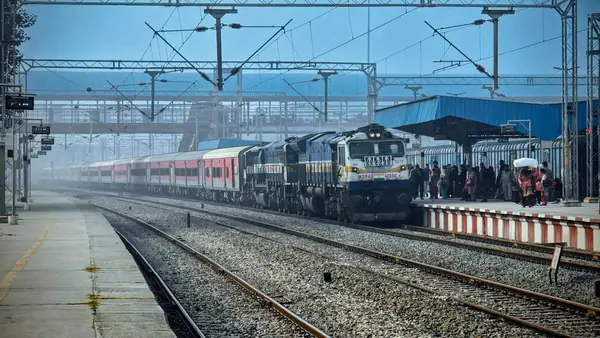
- Doors and build: LHB coaches generally look sleeker, often with a slightly different door design and a smoother, more rounded body profile compared to the boxier ICF shell.
- Coach code: LHB coaches are about 2 metres longer than ICF ones and carry more berths in some classes (80 in an LHB sleeper against 72 in an ICF one), which is often reflected in the coach numbering and composition chart for that train.
If you want to check ahead of time rather than guess on the platform, our guide to coach position codes covers how to read a train's composition, which is the more reliable way to know what you're boarding.
Is the ride quality actually different between the two
Yes, noticeably so on most routes. LHB coaches ride on FIAT-design bogies with better-damped suspension than the older ICF bogie, which cuts down on the jerks and lateral sway passengers feel, especially at higher speed or over points and crossings. The centre buffer coupling also reduces the jolt you feel when a train starts, stops or the driver adjusts speed, compared to the more noticeable jerk through a rake of ICF coaches connected by screw couplings.
| Feature | ICF coach | LHB coach |
|---|---|---|
| Introduced | 1950s | Early 2000s |
| Crash behaviour | Prone to telescoping | Anti-climbing, resists overriding |
| Bogie and suspension | ICF bogie | FIAT-design bogie, better damping |
| Coupling | Screw coupling, side buffers | Centre buffer coupler |
| Typical top speed capability | Lower | Higher, supports faster running |
Which class should you book?
Answer the four questions to see a suggestion.
How this connects to newer safety systems
Coach design is one layer of Indian Railways' broader safety push, alongside signalling upgrades like the Kavach automatic train protection system, which is being rolled out to prevent collisions independent of coach type. The two aren't interchangeable, a Kavach-fitted route with older ICF coaches still benefits from the collision-avoidance system, and an LHB rake on a route without Kavach still has its structural crash advantages, but together they represent the two main directions Indian Railways is investing in for reducing accident severity. Our guide to Kavach and its 2026 rollout covers the signalling side of this in more depth.

What this means for older-style trains you might still book
If you're booking a shorter-distance mail or express train and comfort matters, it's worth knowing you may end up on an older ICF rake, which isn't unsafe by any means, Indian Railways runs a rigorous maintenance regime regardless of coach type, but it will feel noticeably different from a modern LHB-based Rajdhani, Shatabdi or a purpose-built train like Vande Bharat. Our comparison of Rajdhani, Shatabdi and Vande Bharat covers this alongside other class and comfort differences if you're picking between them for a specific route.
Why coach type matters when you're choosing a train
Beyond the safety angle, LHB's higher speed capability is part of what enables India's faster long-distance schedules, including the semi-high-speed running you see on some Rajdhani and Shatabdi routes. If you're comparing two similar trains for a long overnight journey and comfort matters as much as timing, checking whether a train runs LHB rakes is a reasonable extra data point, alongside its actual punctuality history and journey time, both of which matter more day to day than coach type alone. For newer trains built specifically around this kind of upgrade, see our roundup of the fastest trains in India, most of which run on LHB or purpose-built rakes rather than the older ICF design.
Where is your train right now?
Live position, expected arrival at every stop and the delay history of the last few weeks.
Use it on your trip
Frequently asked questions
Why are LHB coaches considered safer in accidents?
LHB coaches have anti-climbing features that keep coaches from riding up over each other in a collision or derailment. ICF coaches are more prone to telescoping, where one coach crushes into the next.
How can I tell which coach type my train uses?
Look at the coupling, LHB uses a centre buffer coupler while ICF uses side buffers with screw couplings, and the overall body shape, LHB coaches look sleeker and are longer. Checking the coach composition chart for your train is the more reliable method.
Are all trains being converted to LHB coaches?
New coach manufacturing has largely shifted to LHB, and rollout continues on long-distance and higher-priority trains, but it's a gradual, rake-by-rake process. Many shorter-distance and lower-priority trains still run older ICF rakes.
Is the ride quality actually different between the two?
Yes. LHB coaches use a more modern bogie and suspension design and a centre buffer coupler, which noticeably reduces the jerks and sway passengers feel compared to the ICF bogie and screw couplings.
Sources
Rules and fares change. Check the official source before you travel. Last reviewed 7 October 2026.